



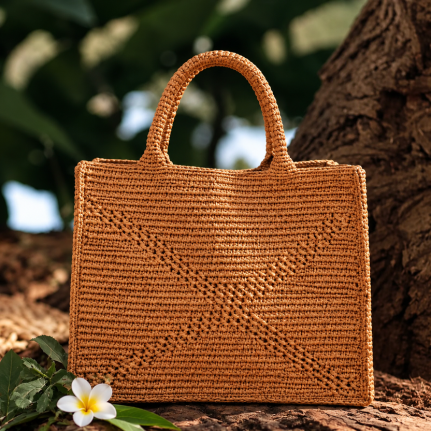
In a world where educational technologies are evolving at high speed, the use of natural and accessible materials such as raffia may seem surprising. Yet this plant fibre offers many educational possibilities, particularly in the learning of mathematics and geometry. Before exploring its role as an educational tool, let’s look at its contribution to sensory learning.
A sensory approach to understanding mathematical concepts
Learning mathematics is often based on abstraction, which can pose difficulties for some pupils. The raffia helps to make these concepts more concrete through a sensory and tactile approach.
- Manipulation and experimentation : By braiding, knotting or intertwining raffia threads, pupils give shape to mathematical structures.
- Development of fine motor skills : Using raffia engages the hands and improves hand-eye coordination, strengthening logical and analytical abilities.
- Kinesthetic learning : By physically manipulating shapes, pupils better assimilate the concepts of angles, proportions and symmetries.
These initial sensory manipulation experiences pave the way for more in-depth geometry learning.
A natural tool for teaching geometry in a fun way
Geometry is often perceived as an abstract discipline. Having introduced pupils to a sensory approach, raffia takes things a step further by helping them to construct their own figures and volumes.
- Construction of geometric figures : Using raffia as string to stretch, pupils can create triangles, squares and polygons on a frame or board.
- Exploring angles and measurements : By manipulating these structures, they experiment with the properties of shapes and gain a better understanding of symmetry and proportional relationships.
- Introduction to solids : By braiding several strands together, it becomes possible to model pyramids and cubes.
In this way, raffia not only supports sensory learning; it also enables the active construction of knowledge. But with the rise of digital tools, is its role still relevant?
Tactile and sensory learning: an alternative to digital tools
New technologies have revolutionised teaching, but some traditional methods retain invaluable advantages.
- Better retention of knowledge : Students who handle concrete objects assimilate abstract concepts better.
- Learning adapted to children with special needs : Those with dyscalculia, for example, can greatly benefit from a tangible, multisensory approach.
- An engaging and fun experience : Working with raffia brings a practical and interactive dimension that engages young learners.
This sensory approach also fits in with an ecological and economic rationale.


Sustainable and local education : an ecological and accessible choice
In a world looking for sustainable solutions, integrating raffia into education offers several advantages.
- An accessible material : Inexpensive and easy to find, raffia is suitable even for schools with limited resources.
- An ecological choice : Natural and biodegradable, it helps reduce plastic waste.
- Local know-how promoted : Its use helps to preserve and pass on craft traditions while associating them with school learning.
The combination of natural materials with tried and tested methods recalls the principles of Montessori pedagogy.
Montessori pedagogy and the use of natural materials
Montessori teaching emphasises learning through experimentation. Raffia fits naturally into this approach.
- The importance of concrete objects : Manipulating a physical material reinforces understanding and memorization.
- Integrating raffia into Montessori activities : It can be used to make geometric shapes and mathematical patterns.
- Learning based on autonomy : It encourages children to explore freely and learn on their own.
This back-to-basics approach illustrates the value of simplicity in learning.
Back to basics: simplicity as a learning tool
Sometimes all we need to do is go back to basics to rediscover the very essence of our creativity. Simplicity, far from being a compromise, proves to be an invaluable source of power. When we take the time to handle real objects, touch, feel, a natural understanding awakens in us, without effort, without a screen to distract us.
Raffia, in all its raw beauty, becomes a ground where the imagination can flourish, a space where the mind can express itself freely, without the limits imposed by technology. This is where the magic happens, in this return to basics, far removed from the digital world. And yet, far from rejecting modern tools, this approach invites us to integrate them differently, to see them not as enemies but as accomplices who, together, open up new horizons.
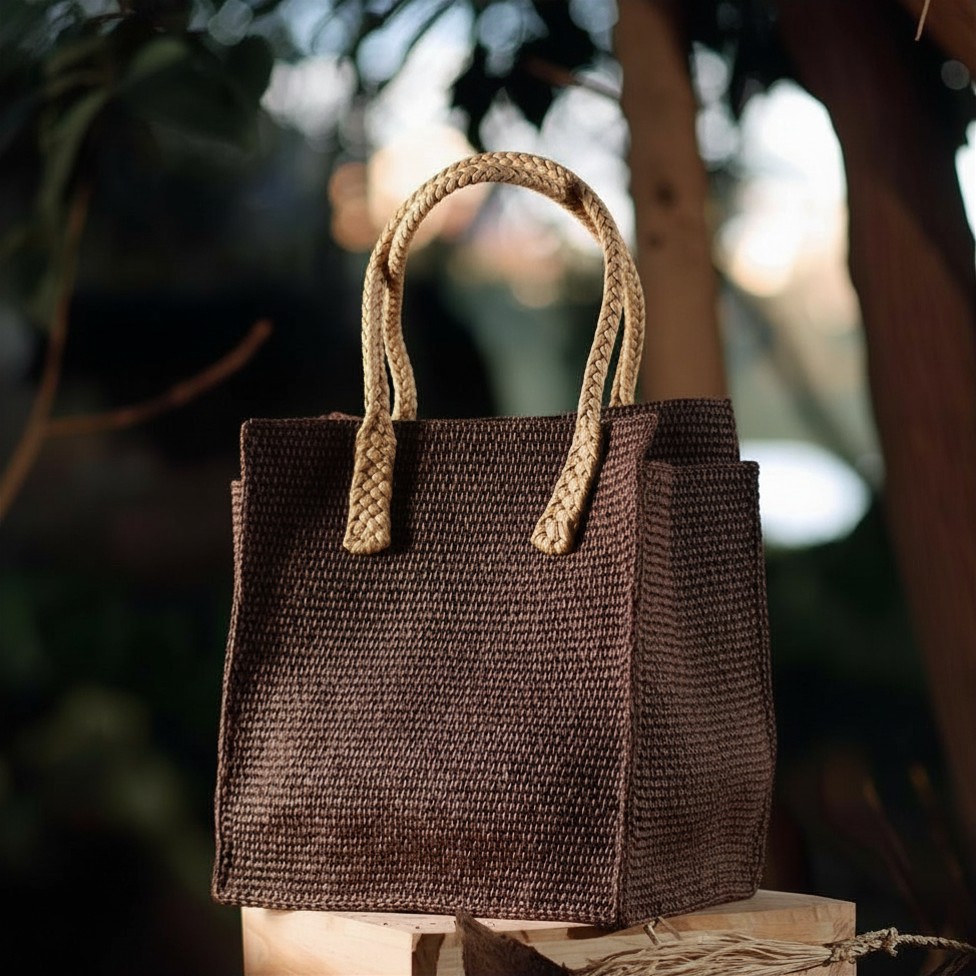

Why is raffia making a strong comeback in international fashion in 2026?
Long associated with local craftsmanship or summer accessories, raffia is…
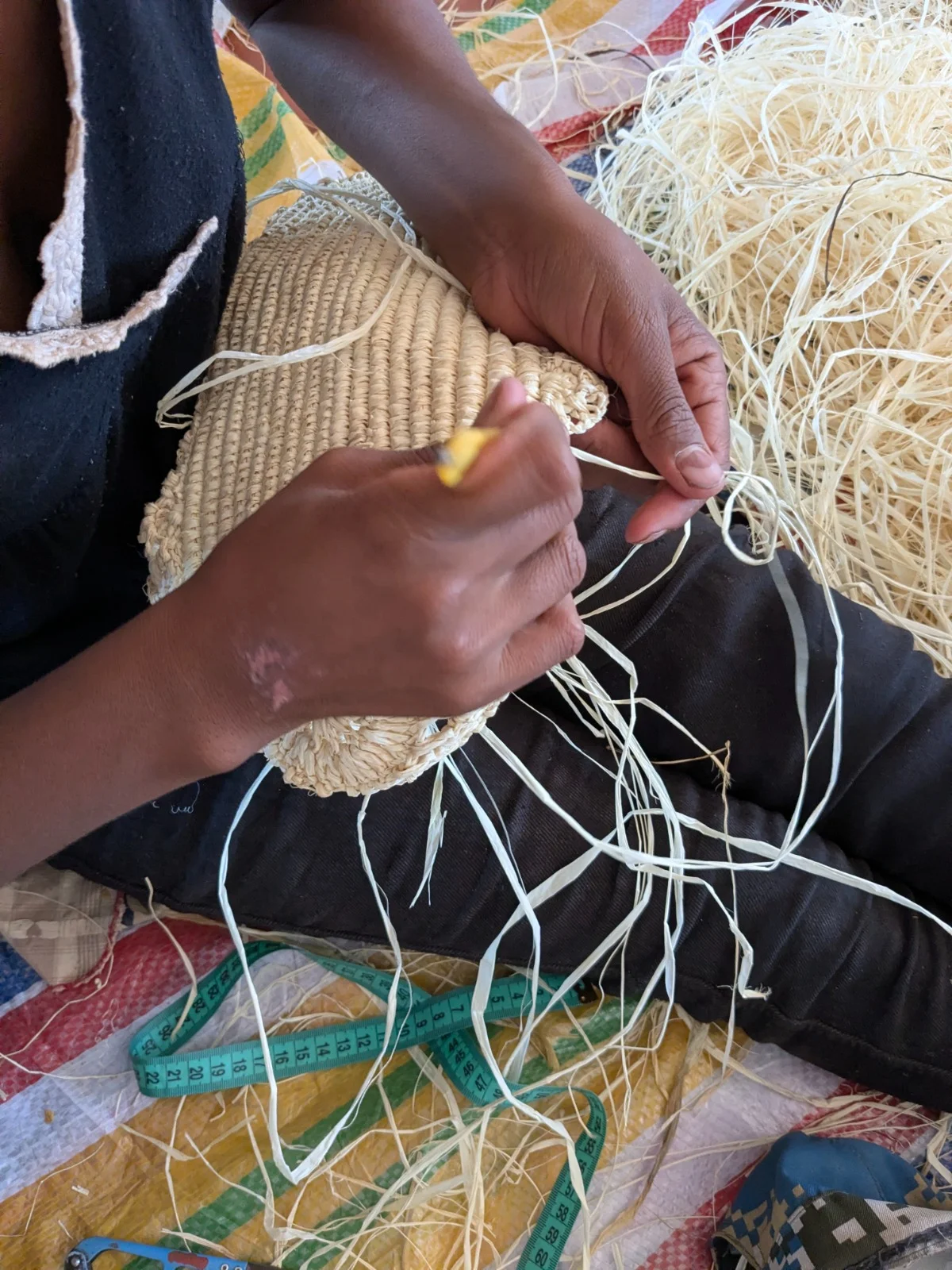
Behind a BLESSED accessory: the hands that create
Before becoming a bag, a basket or an accessory, every…
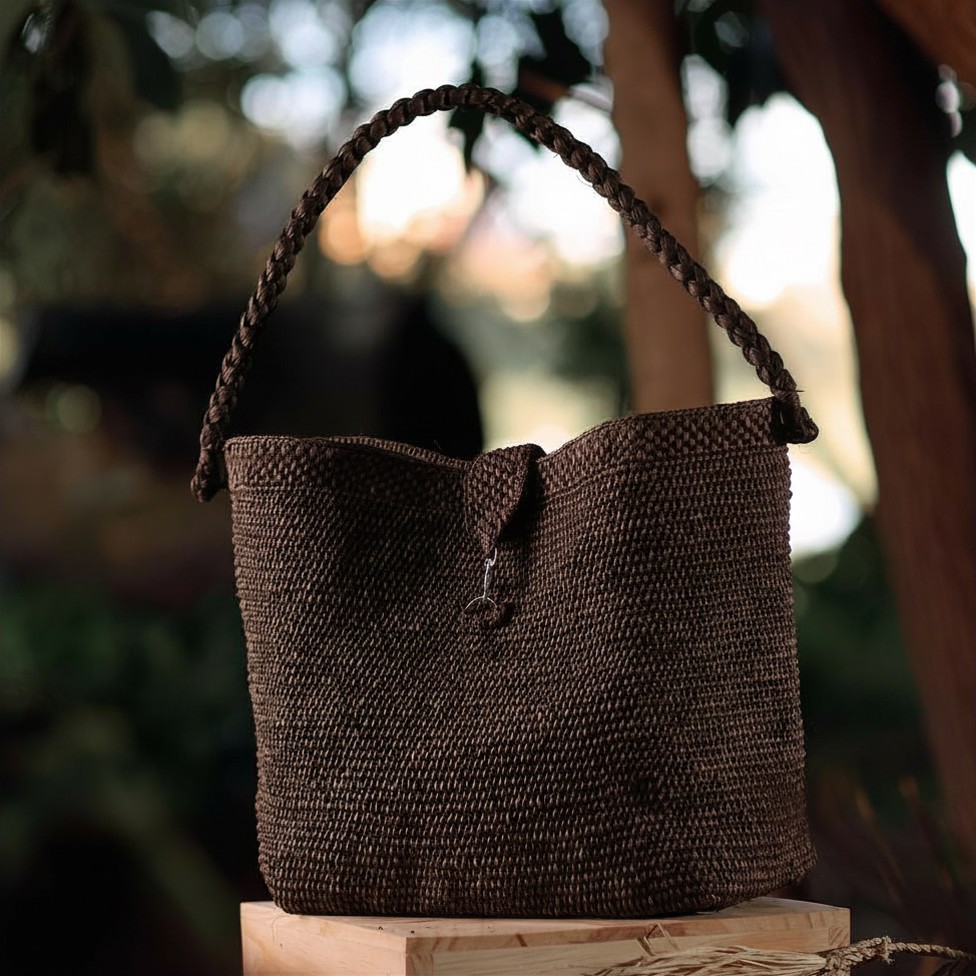
Handmade or machine-made: what consumers should know
In a world where everything moves fast, where industrial production…