


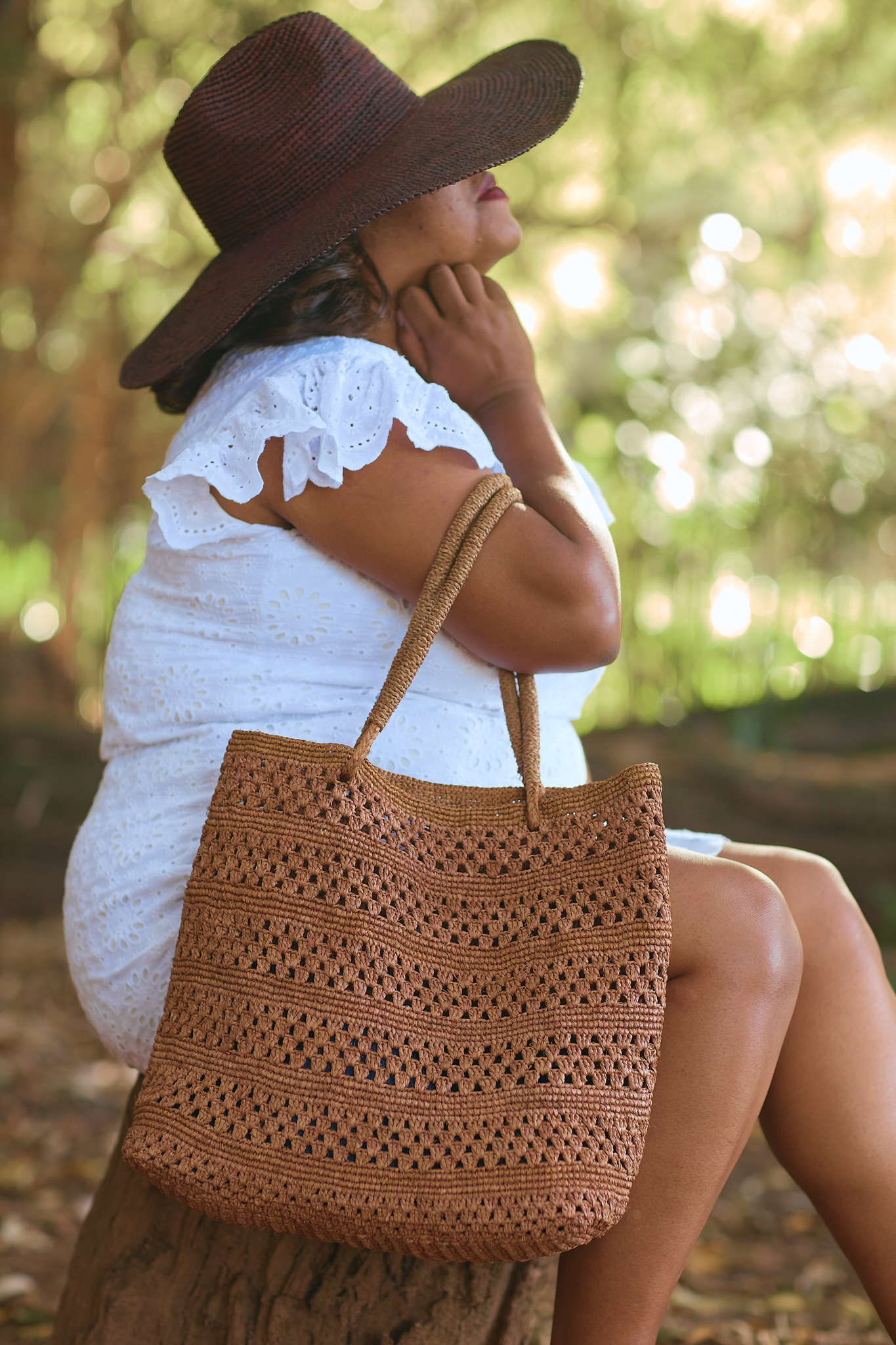
Raffia, a natural fiber derived from the palm tree of the same name, has long been at the heart of traditional craftsmanship. Strong, flexible, and environmentally friendly, it can be used to create a wide variety of objects, from baskets to fashion accessories. Its unique feature is that it can be worked using several techniques, each offering different results and uses.
Let’s discover the main methods together : weaving, crocheting, and knitting, before exploring harvesting, traditional tools, and the innovations that are modernizing this ancient art today.
Harvesting and preparing fibers
Even before being worked, raffia requires careful preparation. The fibers are extracted from young palm leaves, then dried and sorted according to their length and flexibility.
- Drying in the sun to harden and slightly whiten the fibers.
- Soak in water to soften them before working.
- Coloring using natural dyes (bark, roots, leaves) or modern pigments to expand the palette.
This step determines the quality of the thread used. Raffia from Madagascar, for example, is recognized worldwide for its fineness and flexibility, making it a highly sought-after material among designers.
Weaving, crocheting, knitting : what are the differences ?
Once prepared, the fibers can be worked using three main techniques, each offering a particular result.
1. Weaving : the ancient art
Undoubtedly the oldest and most widespread method, weaving involves intertwining several fibers by hand.
Result : sturdy structures, ideal for practical items such as baskets, hats, rugs, or placemats.
2. The hook : precision and finesse
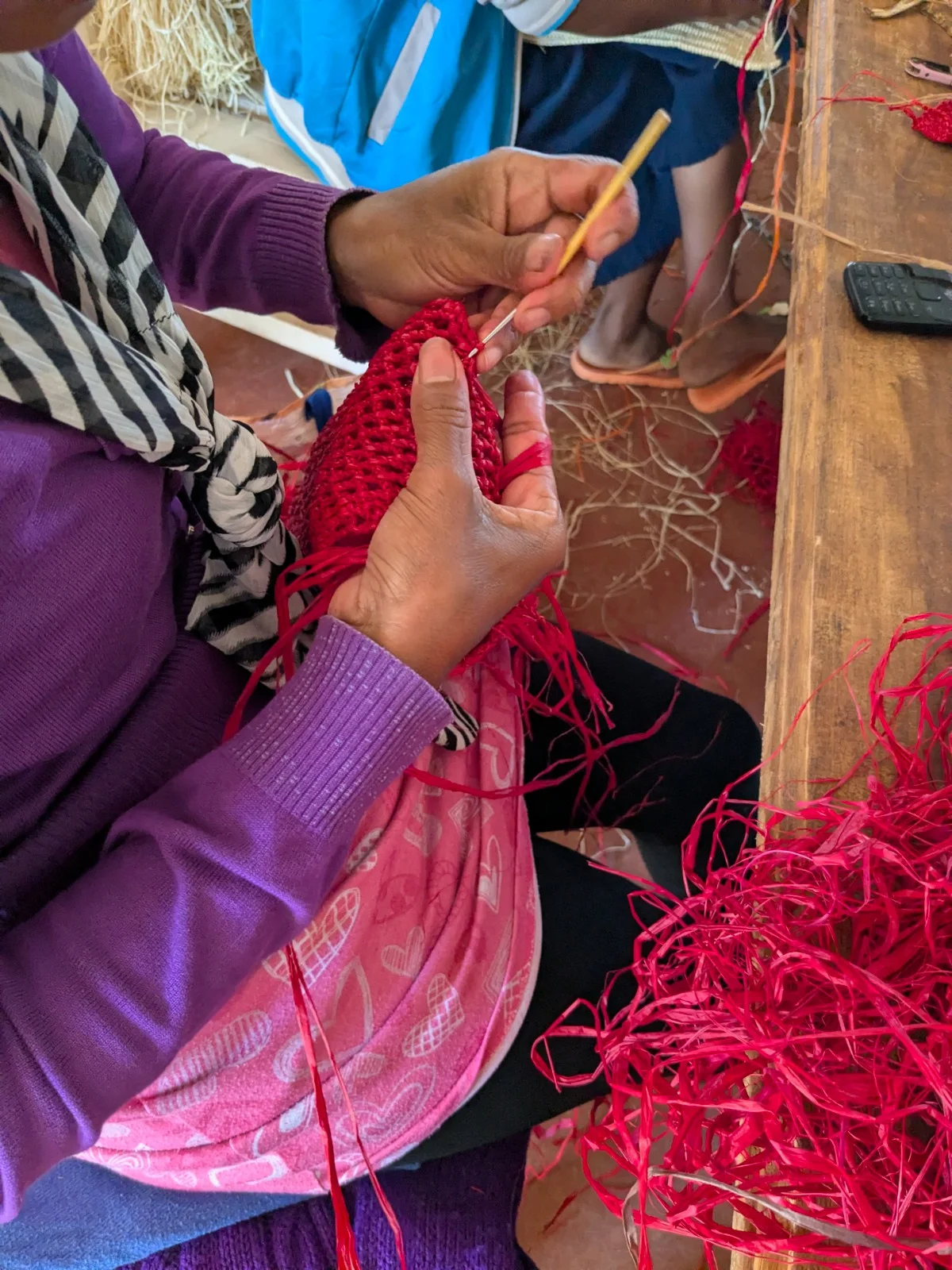
Using a small metal or wooden hook, raffia is worked stitch by stitch like conventional thread.
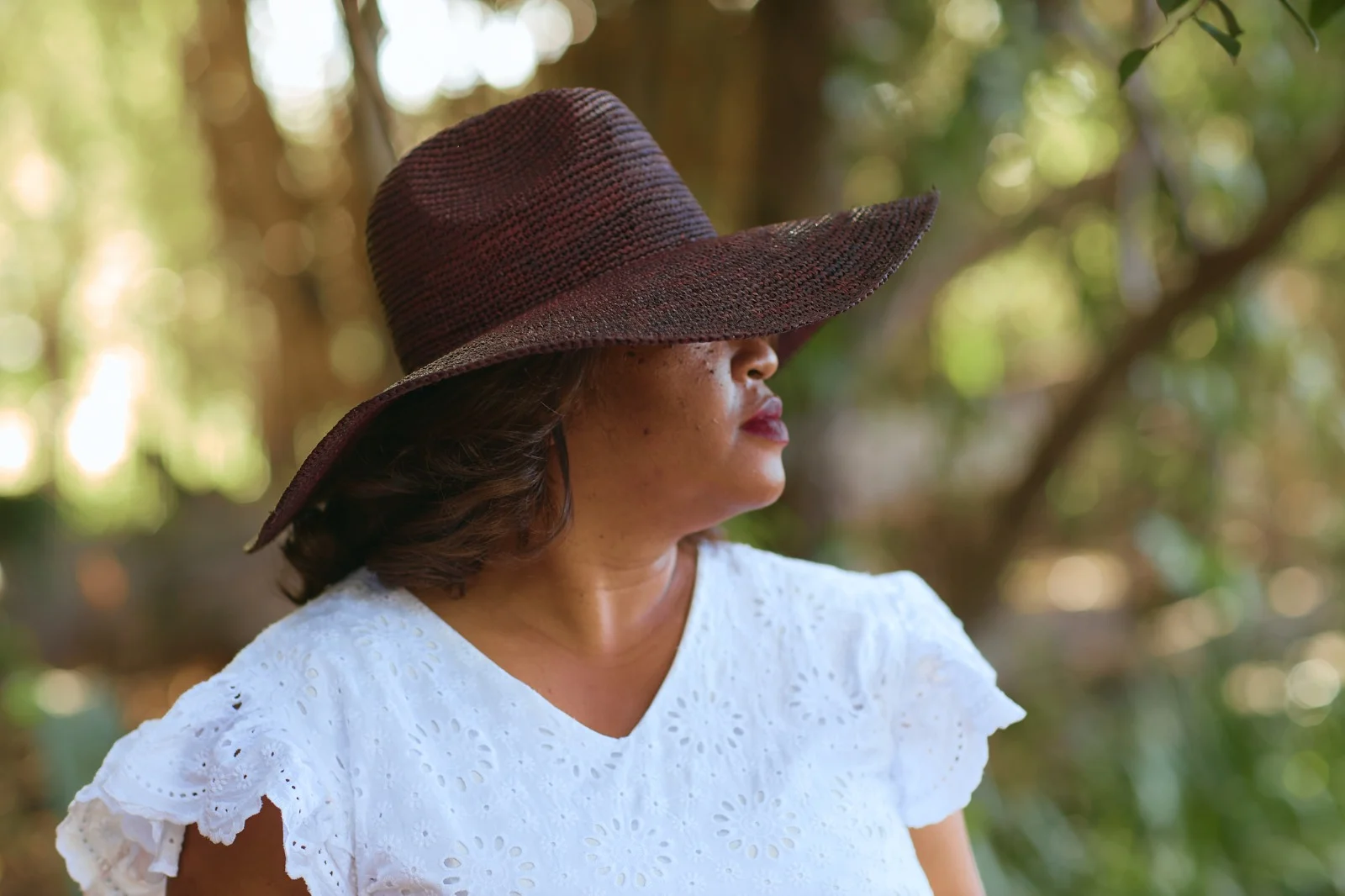
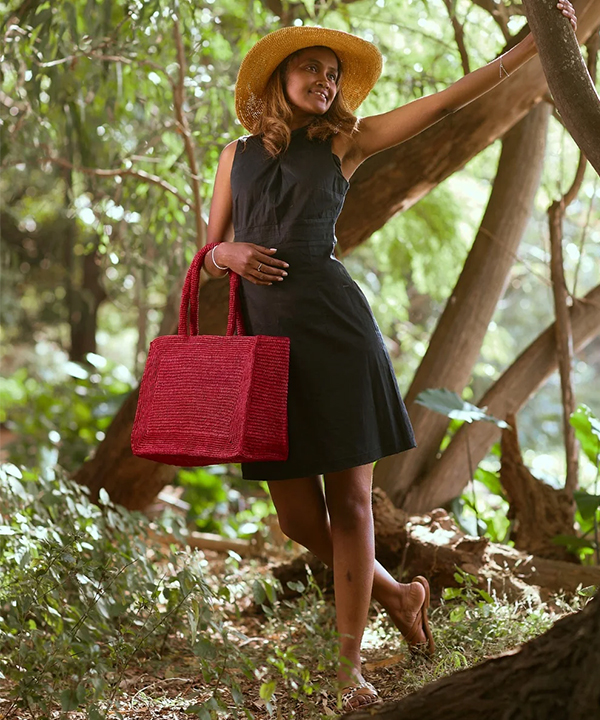
Result : detailed and elegant creations (bags, clutches, hats, baskets, shoulder bags, jewelry, decorative items).
3. Knitwear : a supple and original texture
Less common, but just as creative, knitting uses two needles to create airy and unexpected textures.
Result : original accessories or unique decorative pieces.
In summary : weaving emphasizes strength, crochet emphasizes finesse, and knitting emphasizes creativity. But these techniques only reach their full potential when combined with the tools and expertise passed down through generations.


Traditional tools and methods
Raffia craftsmanship relies on simple but ingenious methods :
- Manual weaving : only with the fingers, without a machine.
- Handcrafted hooks and needles : often made of wood or metal.
These practices, passed down from generation to generation, are not mere techniques : they embody a living cultural heritage, particularly in Madagascar, Africa, and Asia.
In many communities, this expertise is carried on by women, who perpetuate the art of raffia while generating essential income for their families and villages.
Modernization and artisanal innovations
While tradition remains at the heart of the craft, current trends and the rise of ethical fashion have opened up new possibilities. Artisans and designers are reinventing raffia to bring it closer to contemporary tastes :
- New materials : blended with cotton, wool, or polyester for added flexibility.
- Suitable machines : special sewing or knitting machines that save time without compromising on craftsmanship.
- Contemporary design : designer bags, shoes, lighting, and raffia furniture.
- Ecology and sustainability : a powerful symbol of responsible fashion and sustainable design.
Thus, raffia is no longer limited to traditional objects : it is now used in haute couture, modern decoration, and even eco-friendly packaging.
Challenges and prospects
Working with raffia presents several challenges :
- Susceptibility to moisture.
- Competition from synthetic fibers.
- Difficult industrialization without losing artisanal value.
But these challenges also pave the way for new opportunities, particularly thanks to the slow fashion movement and the craze for fair trade craftsmanship. It is in this context that BLESSED is committed to preserving the authenticity of crochet while meeting the expectations of a modern and conscious clientele.
Conclusion
Whether woven, crocheted, or knitted, raffia remains a timeless material. At BLESSED, we transform this natural fiber into unique bags, pouches, and accessories that combine traditional craftsmanship, modernity, and respect for the environment.
With each piece, we offer more than just a product : we share a story, that of a living craftsmanship, looking towards the future.

Strength, finishing and durability: BLESSED’s perspective on artisanal quality
In a world dominated by mass production and fast fashion,…
The benefits of buying ethical accessories instead of fast fashion
Faced with the omnipresence of fast fashion, more and more…
Why a handmade bag costs more: quality, durability and craftsmanship?
When compared with low-cost, mass-produced accessories, a handmade bag may…