


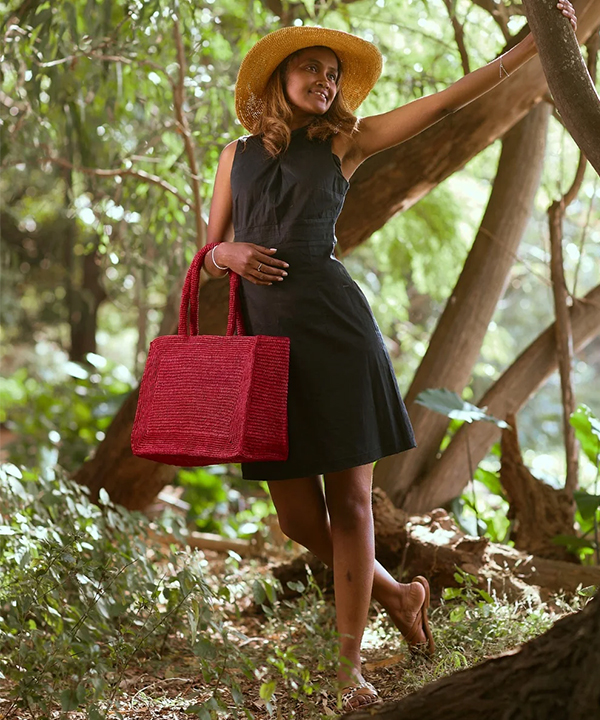
Fashion fascinates us with its style, but it also has a cost for the planet : nearly 10% of global CO₂ emissions come from this industry. Faced with this reality, consumers and designers are turning to more sustainable alternatives. Among them, raffia is attracting attention. But behind its natural appearance, what is its true ecological impact? At BLESSED, we believe that every raffia bag or accessory can combine elegance and responsibility.
The life cycle of raffia : a fiber that grows back
To understand the carbon footprint of raffia, we must first examine its life cycle. This fiber comes from the raffia palm tree, mainly grown in Madagascar and Africa. It is harvested with care : only the young leaves are cut, without cutting down the tree, allowing the plant to continue growing.
Thus, raffia is a renewable resource. Furthermore, it is 100% biodegradable, unlike synthetic materials, which take centuries to disappear. This natural characteristic already makes it a more environmentally friendly choice.
A naturally reduced carbon footprint
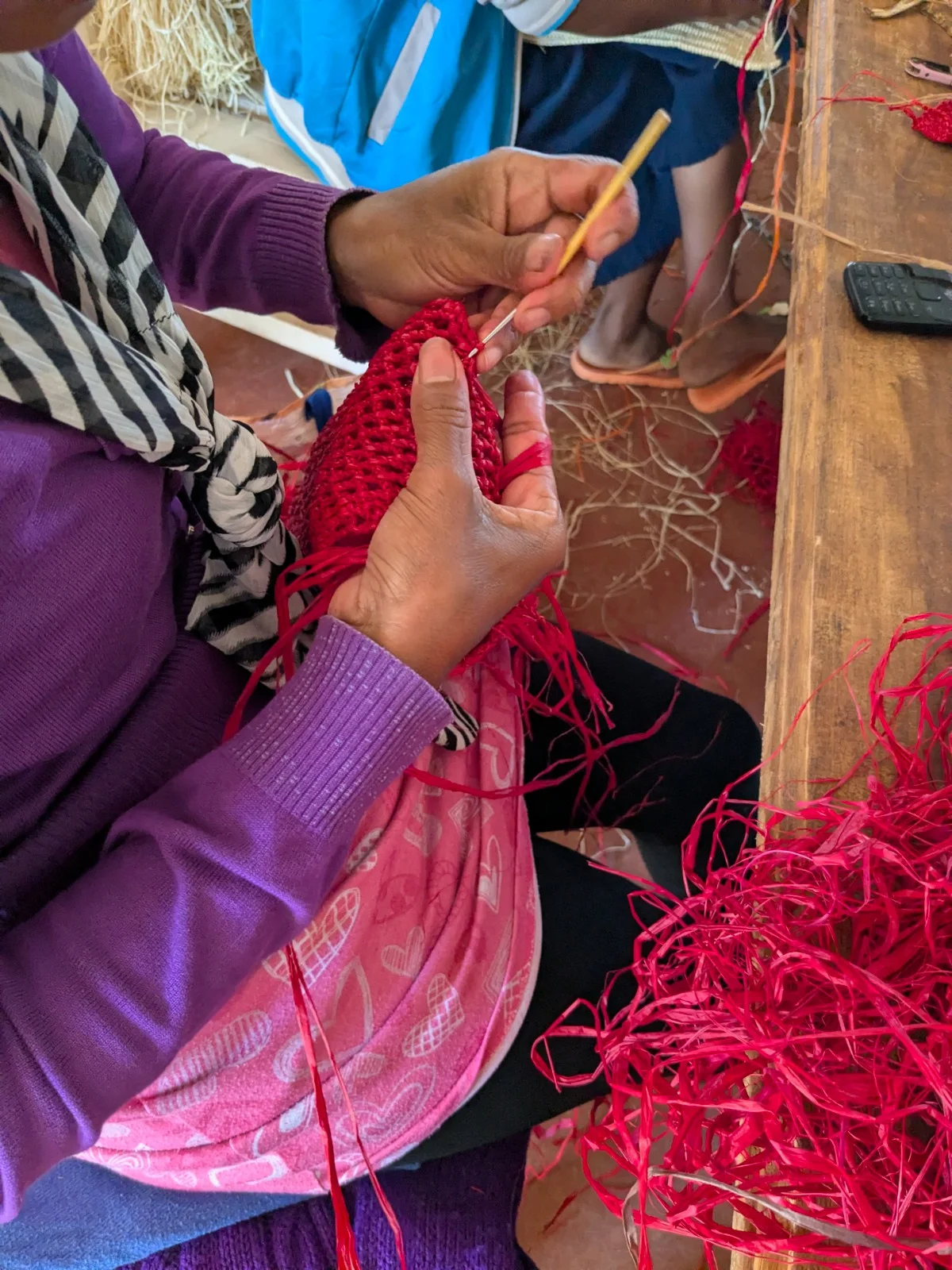
But sustainability doesn’t stop at harvesting. Artisanal raffia production requires little energy : the fibers are extracted and prepared by hand, without the use of heavy machinery. By comparison, producing 1 kg of cotton requires an average of 2,700 liters of water, while raffia grows naturally and without pesticides. Of course, certain chemical dyes can slightly increase its impact, but the use of natural dyes keeps this fiber environmentally friendly.

Transportation : a factor that should not be overlooked
Despite its natural qualities, transportation can increase raffia’s carbon footprint. International shipping, whether by sea or air, contributes significantly to emissions. That is why promoting local consumption or supporting supply chains close to production can significantly reduce the environmental impact of the final product.
Comparison with other fibers
To better understand the ecological value of raffia, it is useful to compare it to other common materials used in fashion :
| Fiber | CO₂ emitted (kg/kg product) | Weaknesses | Strengths |
| Polyester | ≈ 9,5 | Non-biodegradable, derived from petroleum | Highly resistant |
| Cotton | ≈ 2.1 + 2,700 L of water | Water consumption and pesticides | Confort, naturel |
| Raffia | ≈ 1.5 (depending on transport) | Chemical dyeing possible & export | Renewable, biodegradable, artisanal |
This comparison clearly shows that, when processed responsibly, raffia is an eco-friendly and sustainable fiber, offering a real environmental advantage.
BLESSED : creations that make a difference
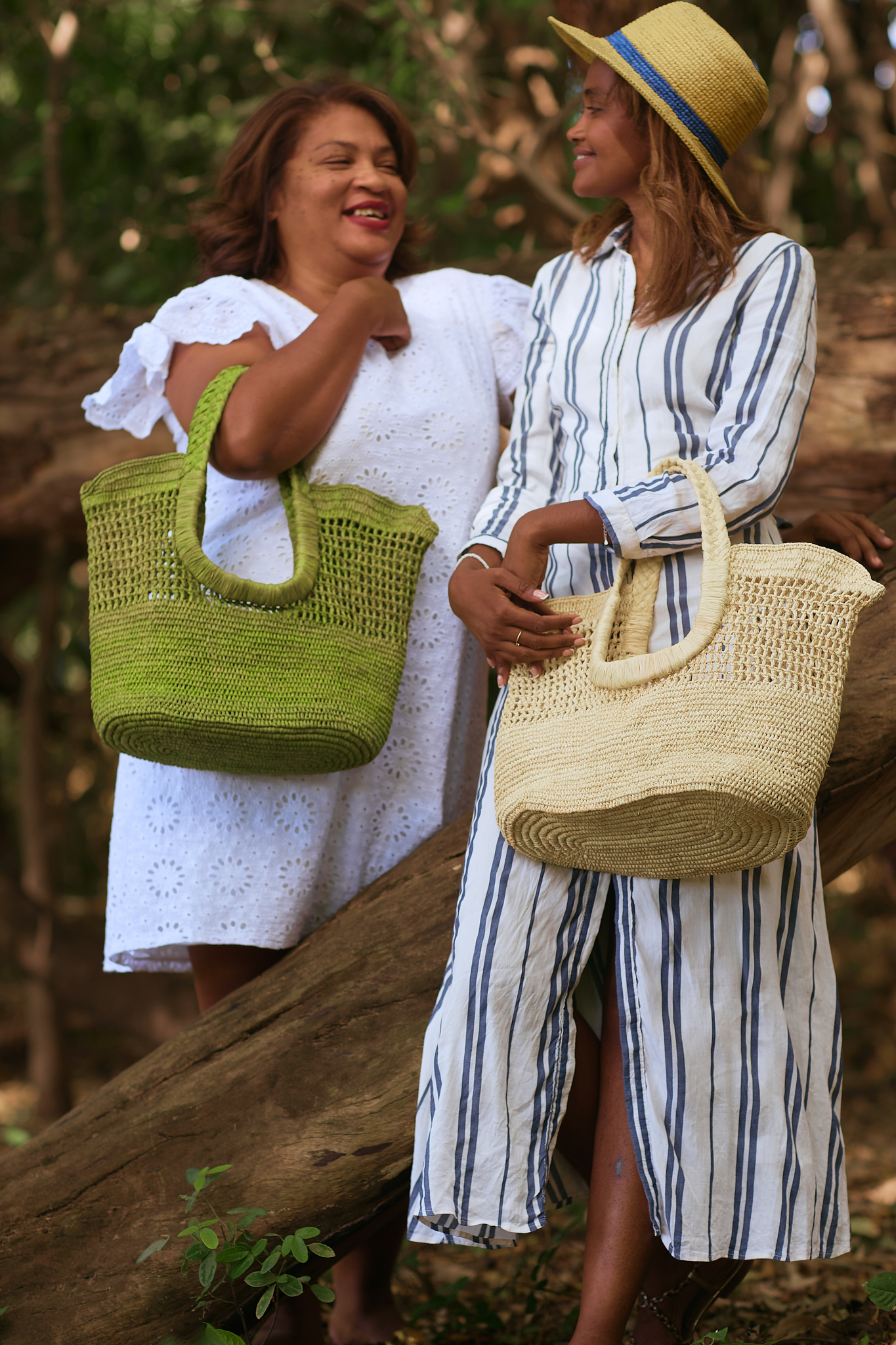
At BLESSED, we go beyond simply choosing natural materials. Each bag and accessory is designed to last, limiting frequent replacement and supporting Malagasy craftsmanship. Our dyes are environmentally friendly, and our short supply chains reduce unnecessary transportation.
In concrete terms, choosing a BLESSED raffia bag can prevent the emission of 5 to 10 kg of CO₂ compared to an equivalent polyester bag. In this way, each creation becomes a concrete gesture for the planet.
Conclusion
Raffia is not only elegant and artisanal : it is also a conscious choice to reduce the ecological impact of fashion. Its durability, biodegradability, and responsible production make it a more environmentally friendly alternative than many other fibers. With BLESSED, each raffia accessory is more than just an object : it is a commitment to the planet and to local communities.

Why invest in a handmade accessory rather than fast fashion?
Fast fashion has profoundly changed the way we consume fashion.…
Comparison: raffia bags vs synthetic bags – longevity and style
Choosing a bag is no longer just about price or…
Colours and styles that stay fashionable longer: investing smartly with blessed
In a world dominated by fleeting trends, learning to recognise…