


Every year, millions of tons of plastic end up in our oceans, our soil, and even in our food. Plastic bags, films, and trays made from petrochemicals are certainly convenient, but they pose a major problem: their lifespan far exceeds their useful life. Faced with this reality, the search for sustainable alternatives has become urgent. It is in this context that materials such as raffia and bioplastics are attracting growing interest.
Raffia: a traditional material making a comeback
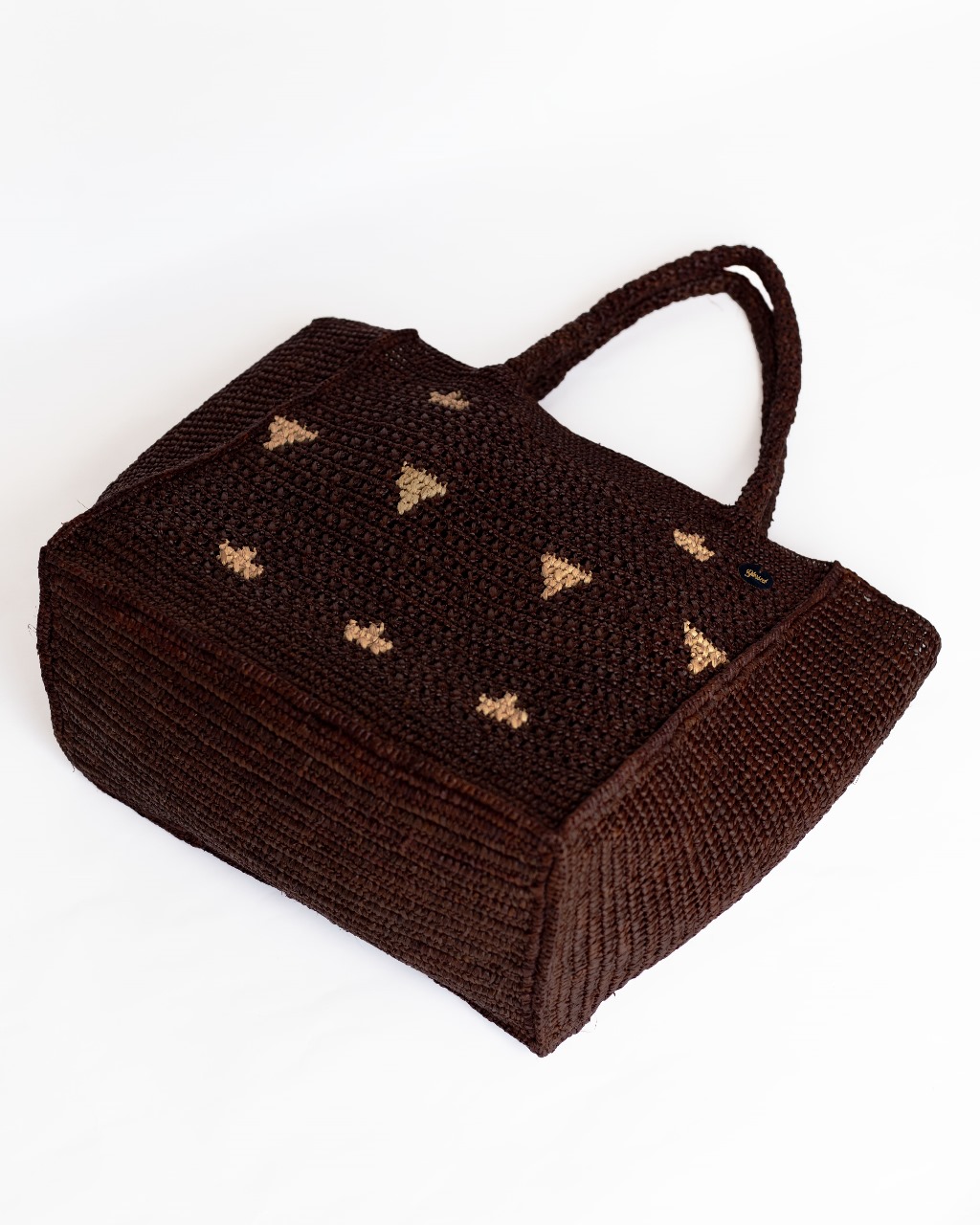
Before entering the world of high technology, let’s take a look at what nature has long had to offer. Raffia, a fiber derived from a tropical palm tree, has always been used in crafts (ropes, bags, weaving). Today, its potential goes much further: biodegradable, renewable, and available in many regions, it is the perfect solution to today’s waste reduction challenges.
Raffia can replace certain types of lightweight packaging, such as:
- Reusable bags and shopping bags
- Nets and covers for fruits and vegetables
- Decorative accessories with low environmental impact
Thus, a resource once considered “traditional” is transforming into a modern player in the ecological transition.
Bioplastics: when science imitates nature
While raffia connects us to tradition, bioplastics represent scientific innovation. Produced from renewable resources (corn starch, sugar cane, algae, etc.), they mimic the properties of conventional plastics while reducing their ecological footprint. Some are biodegradable, others compostable, and still others are simply bio-based (but not biodegradable).
This diversity allows for different uses:
- Compostable food films
- Biodegradable cups and cutlery for catering
- Bio-based trays for the food industry
However, the challenge remains their production cost, which is still high compared to conventional plastic, as well as their end-of-life management (industrial composting sometimes necessary).


Complementarity between raffia and bioplastics
Rather than viewing them as opposites, raffia and bioplastics can be seen as two complementary solutions. The former is particularly suited to reusable and artisanal uses, while the latter meets industrial and large-scale needs. Together, they pave the way for a wider range of alternatives capable of reducing our dependence on polluting packaging.
In other words, raffia promotes the local circular economy, while bioplastics are part of a more technological and industrial approach.
Towards integration into the circular economy
For these alternatives to deliver on their promise, they must be part of a circular economy model, where every resource is designed to be reused, recycled, or composted. This involves:
- Greater consumer awareness of proper sorting practices
- Investments in appropriate infrastructure (composting, collection)
- Support for local raffia producers and bioplastics industries
Without this framework, even the most virtuous materials risk repeating the mistakes of conventional plastic.
Conclusion
Whether it’s raffia or bioplastics, there is no magic solution. Their effectiveness depends as much on research and innovation as it does on the willingness of consumers, businesses, and public authorities. But their development proves that there are indeed credible alternatives to polluting packaging. The question is therefore no longer whether we can change, but when and how we are going to do so.

The challenges facing the raffia sector in Madagascar: how can they be overcome?
How to overcome the challenges facing the raffia sector in…

Raffia and sisal : how do these two fibers complement each other in design ?
Contemporary design is increasingly favouring natural materials. Among the most…

7 Ways to Use a Sisal Clutch in Your Daily Life
In a daily life where natural materials are becoming central…