


Raffia is much more than a plant fiber: it is a symbol of authenticity, sustainability, and creativity. As such, it represents textile sovereignty for producing countries. Used for generations in several producing countries, notably Madagascar, it embodies unique artisanal expertise and a deep connection between humans and nature.
Today, as the global fashion industry seeks to reinvent itself around sustainability and ethics, raffia is positioning itself as a strategic lever for asserting true textile sovereignty. At BLESSED, we see this natural fiber not only as a raw material, but as a cultural and economic force capable of transforming the future of fashion and restoring value to producing countries.
The role of raffia in African textile sovereignty
In African textile sovereignty, raffia plays this key role: it is a strategic asset. By capitalizing on this local resource, producing countries can reduce their dependence on imports, develop high value-added processing and craft industries, and position themselves on the global market with an ecological, authentic, and sustainable fiber. Raffia is thus emerging as an economic and identity-building opportunity to build a more autonomous, competitive, and responsible African textile industry.
Raffia: a fiber with identity and universal appeal
Before understanding its role in textile sovereignty, we must return to what makes raffia unique. Derived from tropical palm trees, it is a natural fiber that is both flexible and resistant. In many countries, it plays a central role in traditions: ceremonial clothing, weaving, rope, decorative objects, and even everyday accessories.
In Madagascar, for example, raffia has always been part of the rituals and artisanal life of local communities. This strong cultural connection makes this fiber much more than just a material: it is a living heritage.
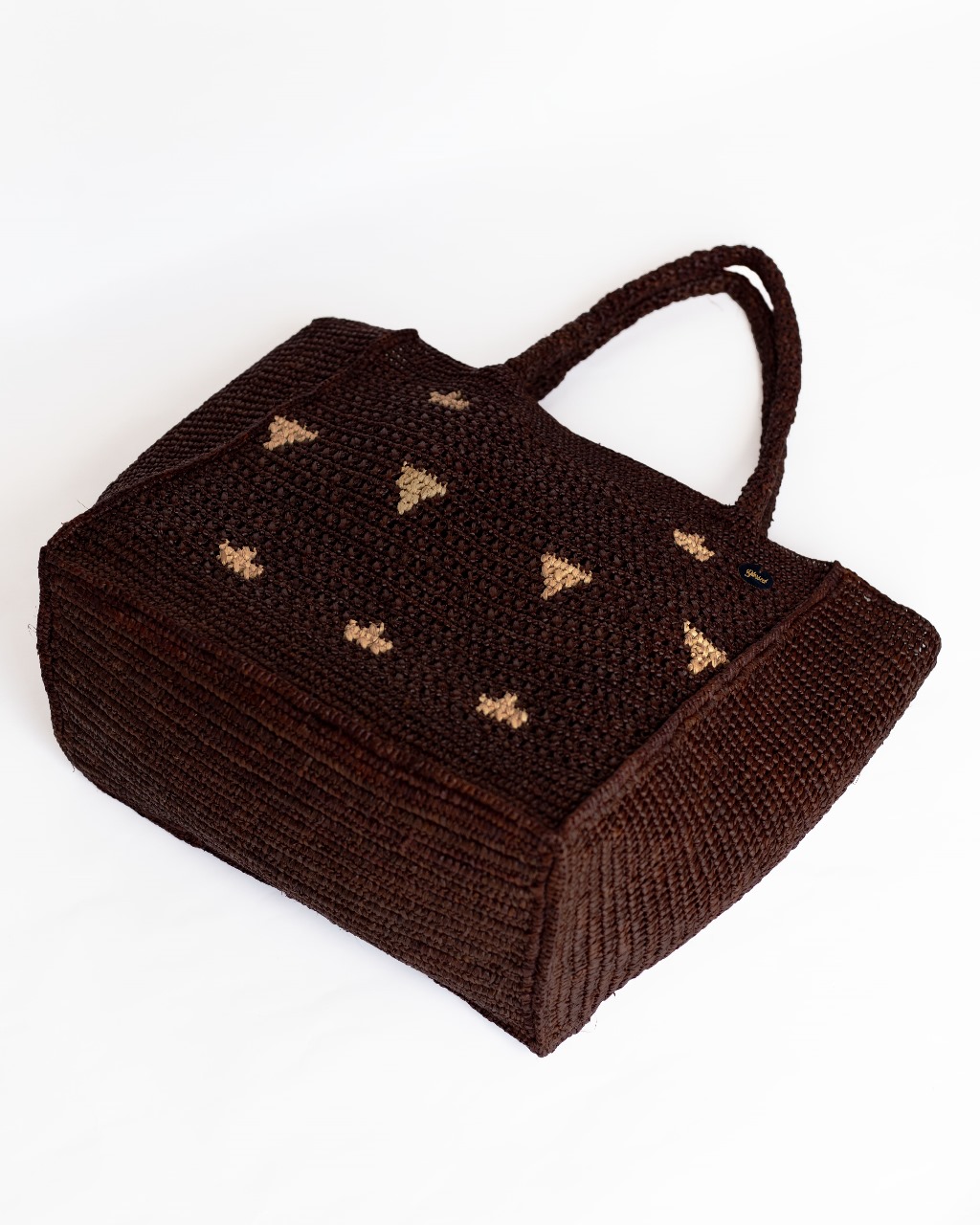
Today, this rich craftsmanship has found a new voice through modern design, combining tradition and innovation. At BLESSED, marvel at the world of raffia: Malagasy handcrafted items, Malagasy crochet. Designers transform raffia into contemporary bags and accessories that embody both authenticity and respect for nature.
- Are you a producer or artisan working with raffia weaving and wondering which type of work is more durable? Discover the differences in strength between spiral weaving and flat weaving.
Textile sovereignty: a major issue for raffia-producing countries
Beyond its beauty and cultural identity, raffia has a strategic dimension. Textile sovereignty is the ability of producing countries to control and develop their resources without relying exclusively on imports.
In a world where fast fashion still relies heavily on synthetic fibers derived from petroleum, raffia represents a valuable alternative. Rare, sought-after, and sustainable, it has the potential to become a major economic asset, provided it is processed and promoted locally.
It is with this in mind that numerous initiatives are emerging: working directly with artisans, developing fair trade channels, and promoting production that primarily benefits local communities.
Hand-crocheted malagasy raffia: the heritage that BLESSED transforms into art. Become our reseller and receive comprehensive marketing support. Learn more.
Raffia for African natural textiles: an economic and sustainable driver
Textile sovereignty also has economic and environmental implications. Global demand for natural and ethical products is growing at an estimated annual rate of over 10%. In this context, raffia represents a unique opportunity for producing countries:
- Creating jobs by supporting rural communities.
- Increase the value of exports by focusing on finished products rather than just raw materials.
- Promoting a circular economy with a 100% biodegradable and renewable fiber.
Each raffia bag or accessory becomes more than just a fashion item: it embodies a responsible economic choice and an affirmation of textile independence.
Did you know? A raffia bag can last for years. Find out more.
Tradition and modernity combined
However, for this resource to truly become a lever for the future, a balance must be struck between heritage and innovation. Preserving traditional craftsmanship is essential, but it is equally important to adapt designs to current international fashion trends.
It is precisely in this encounter between tradition and modernity that raffia reveals its full power. Handcrafted, respecting ancestral techniques, but designed to appeal to a global audience, raffia creations have a dual identity: that of a preserved heritage and that of a fashion that looks to the future.
Textile raffia vs. synthetic fibers for a sustainable market
Raffia differs from synthetic fibers in that it is 100% natural and has a low environmental impact. Whereas polyester and nylon are made from polluting petrochemical derivatives, raffia comes directly from palm trees, a renewable resource that can be grown and processed locally. This gives it a privileged place in the transition to more environmentally friendly textiles.
In the sustainable market, raffia also represents a powerful selling point for fashion, decoration, and craft brands. Today’s consumers are looking for ethical, authentic, and traceable products. By incorporating raffia into their collections, companies are responding to growing demand while promoting the expertise of artisans in producing countries.
Why invest in raffia textiles rather than cotton?
Why invest in raffia rather than cotton? Cotton, although historically dominant, suffers from high water consumption and dependence on chemical inputs, which increases its environmental impact and production costs. Raffia, on the other hand, grows naturally in tropical areas without requiring extensive agricultural infrastructure, making it a more accessible and sustainable fiber for producing countries.
Choosing raffia also means supporting a more inclusive economic system. Unlike cotton, which often depends on large industrial farms, raffia can be processed by cooperatives, local SMEs, and artisans. This model creates more direct jobs and strengthens textile sovereignty, while offering investors a unique opportunity in a rapidly growing niche market.
Position of raffia in the global natural textile market
The global market for natural fibers is dominated by cotton, wool, and linen. However, raffia is increasingly standing out thanks to its unique properties: strength, flexibility, and an authentic look that appeal to designers and consumers seeking responsible alternatives. Its artisanal and sustainable image is a differentiating marketing asset in a saturated market.
Today, raffia is gaining visibility in ethical fashion, interior design, and luxury accessories. International brands are already incorporating this fiber into their collections, paving the way for global recognition. With a strategy of promotion and certification (fair trade, traceability), raffia can establish itself as a material of the future in natural textiles.
Raffia and textile competitiveness in Africa and Madagascar
In Africa, and particularly in Madagascar, raffia offers a natural competitive advantage. It is an abundant local resource that does not require heavy investment in cultivation and can be processed directly on site. By focusing on raffia, producing countries can develop an independent textile industry, reduce import costs, and offer unique products on the international market.
Competitiveness also depends on promoting artisanal expertise. Madagascar, for example, is renowned for its raffia accessories, bags, and textiles, which are popular in European and Asian markets. By combining innovation, modern design, and authenticity, producing countries can position raffia as a signature African textile, thereby strengthening their position in the global market while asserting their economic sovereignty.
Conclusion
Raffia is not just a natural fiber: it is a symbol of economic freedom, cultural identity, and sustainability. For producing countries, it represents a concrete lever for textile sovereignty and an opportunity to position themselves on the world stage with high value-added products.
Through bags and accessories made from raffia, BLESSED has chosen to highlight this richness and contribute to a more responsible, authentic, and inspiring fashion industry. Because each raffia creation is much more than an accessory: it is a story, a source of pride, and a contribution to a more sustainable future.


The challenges facing the raffia sector in Madagascar: how can they be overcome?
How to overcome the challenges facing the raffia sector in…

Raffia and sisal : how do these two fibers complement each other in design ?
Contemporary design is increasingly favouring natural materials. Among the most…

7 Ways to Use a Sisal Clutch in Your Daily Life
In a daily life where natural materials are becoming central…