


Raffia of Madagascar is much more than just a plant fiber. Behind every bag or accessory lies a story of craftsmanship, durability, and elegance that is not always apparent at first glance. Many people associate raffia with summer fashion, unaware that it is a noble material, worked by passionate artisans, and that it possesses unique qualities.
In this article, we will highlight 7 often overlooked details that make all the difference and explain why Malagasy Raffia is now establishing itself as a sustainable, chic, and authentic choice.
1. A naturally elegant texture
The first thing that sets Malagasy Raffia apart is its unique texture. Unlike coarser fibers such as straw or sisal, raffia is soft to the touch yet strong. This allows for the creation of accessories that are not only beautiful to look at, but also pleasant to use on a daily basis.
For example, a straw bag can sometimes scratch or irritate the skin when carried on the shoulder. Raffia, on the other hand, is much more comfortable. It’s this small detail that makes you want to keep it with you all day long, whether you’re going to the market, the office, or traveling.
2. The flexibility of the weave
Raffia of Madagascar is known for its exceptional flexibility. This quality allows it to adapt to different uses without losing its shape. Artisans have mastered the art of weaving to achieve a balance between rigidity and flexibility, making bags and accessories both functional and attractive.
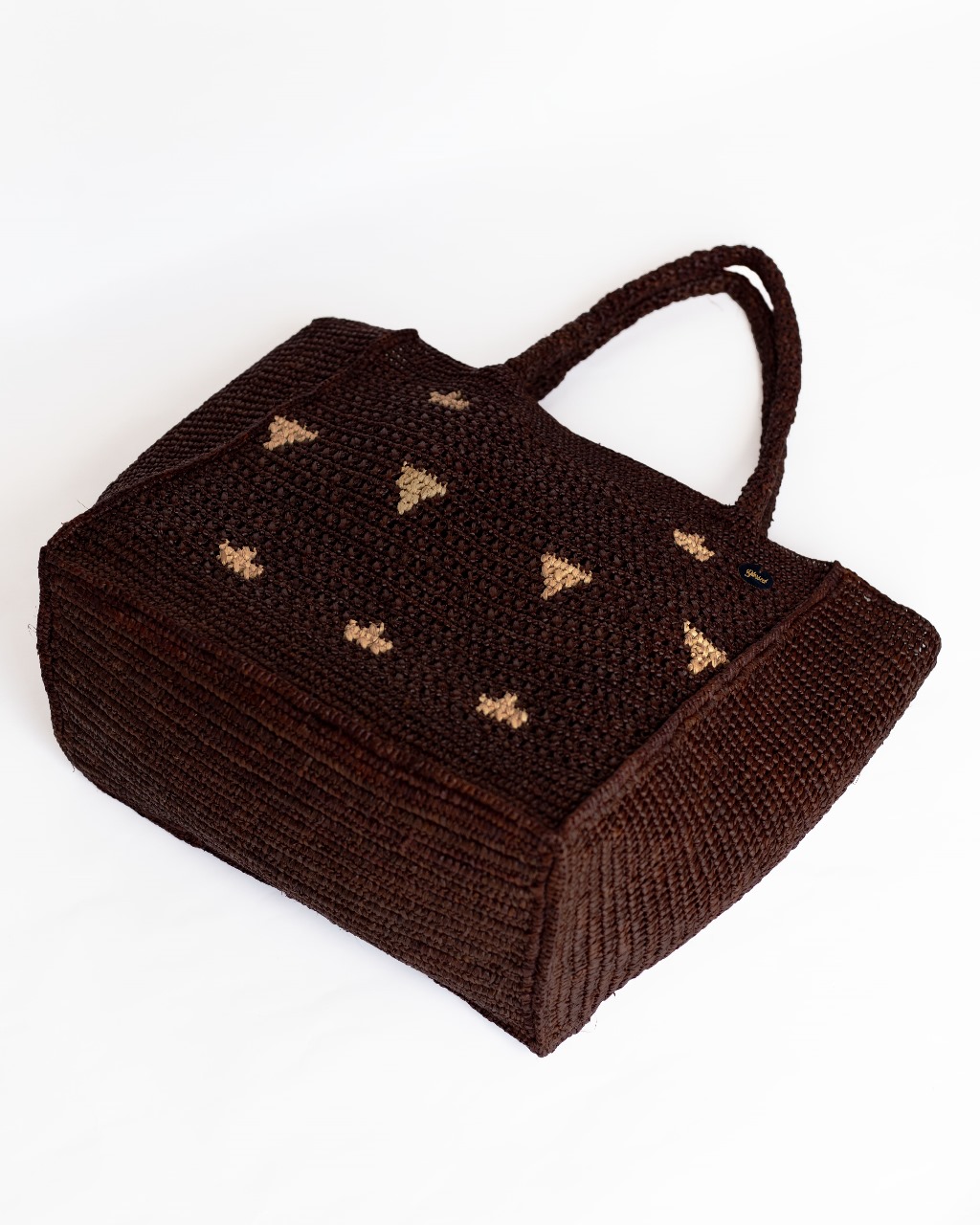
For example, a raffia tote bag can easily hold your groceries or even a laptop without losing its shape. Unlike a rigid plastic bag that can break or a fabric bag that stretches too quickly, raffia retains its shape and adapts to your needs.
3. Surprising durability
Many people think that natural fiber accessories are fragile, but Malagasy raffia proves otherwise. Thanks to precise, tight hand weaving, it offers a level of strength that rivals industrial materials. It is a material that stands the test of time if properly cared for.
Some customers report having kept their raffia bags for more than five years without them losing their shape or elegance. Whereas a synthetic fabric or low-quality leather bag will wear out in a season, raffia retains its charm and even becomes more beautiful with age.
4. Improved moisture resistance
Moisture is often the enemy of natural fibers. Cotton, for example, quickly becomes moldy, while sisal becomes brittle. Raffia of Madagascar, on the other hand, is particularly well suited to humid climates. This is due to the quality of the fiber and the drying and weaving techniques used by artisans.
A raffia bag can therefore be taken to the beach or used at the seaside without fear of it deteriorating quickly. This is a considerable advantage over other materials, and explains why raffia is so popular for travel bags and summer shopping bags.


5. Unique natural colors
Malagasy raffia is often dyed using traditional, natural methods that employ plant pigments. These techniques produce warm, authentic colors that are unlike those produced by industrial processes.
As a result, two bags from the same collection may have slight differences in color. This is what makes them so valuable: each piece is truly unique. Where industrial production seeks uniformity, Raffia of Madagascar champions authenticity.
6. Weaving that tells a story
Each raffia accessory is the result of hours of manual labor. Each artisan has their own way of weaving, their own patterns, and their own signature. These slight variations are not flaws, but proof that each piece is handmade.
For example, some products feature geometric patterns, while others have more fluid lines. These subtle differences make each creation unique, much like a work of art. Buying a raffia bag is not just buying a simple accessory, it is acquiring a piece that carries a story within it.
7. The human touch behind each piece
Behind every Malagasy raffia bag are craftswomen, families, and expertise passed down through generations. Choosing raffia is therefore also a way of supporting local craftsmanship and a fairer economy.
A raffia bag can take several days of meticulous work, from harvesting the fiber, drying it, dyeing it, to the final weaving. Each piece bears the human imprint of the person who made it, making it an object with strong emotional value, far beyond a simple fashion accessory.
Conclusion
Raffia of Madagascar is not just a natural material: it is a source of style, durability, and authenticity. Behind its soft texture, flexibility, strength, and unique colors lie valuable expertise and a strong human touch. When you choose a bag created by BLESSED, you’re not just choosing an accessory. You’re choosing an item that tells a story, supports artisans, and will accompany you for a long time with elegance.


The challenges facing the raffia sector in Madagascar: how can they be overcome?
How to overcome the challenges facing the raffia sector in…

Raffia and sisal : how do these two fibers complement each other in design ?
Contemporary design is increasingly favouring natural materials. Among the most…

7 Ways to Use a Sisal Clutch in Your Daily Life
In a daily life where natural materials are becoming central…