


Raffia, a plant fiber with multiple assets, is increasingly seducing the fashion industry. Lightweight, resistant and biodegradable, it fits perfectly into the new eco-responsible trends. However, to go beyond accessories and consider a line of raffia clothing, major challenges must be overcome. What technical hurdles must be overcome, and what opportunities can this natural fiber offer the fashion industry?
Challenges in designing a line of raffia garments
Textile innovation
The first challenge facing raffia is its rigidity. Unlike traditional fabrics, it is a hard fiber that requires specific techniques to transform it into a soft, comfortable textile. Research is underway to combine it with other natural fibers to improve its flexibility while preserving its authenticity.
Durability and maintenance
Another challenge is durability and maintenance. A garment must be able to be washed and resist wear and tear. However, raffia is sensitive to moisture and can deteriorate more quickly than other fabrics. To overcome this obstacle, natural treatments to enhance its resistance are being considered, which could improve its longevity without compromising its ecological qualities.
Production costs
Because raffia is an artisanal fiber, it requires a meticulous manufacturing process, which increases the cost of garment production. Handcrafted production requires specific skills and time, which has a direct impact on the price of the garments. However, this rarity and expertise can also position raffia as a high-end product sought after by consumers ready to invest in unique creations.
Accessibility and market
Although it is a noble material, it is still little used in the clothing industry. Convincing consumers to adopt this fiber beyond accessories remains a challenge. A strategy of raising awareness and highlighting its unique advantages will be needed to make raffia an essential choice in fashion collections.
Opportunities for ethical and trendy fashion
Eco-responsibility and craftsmanship
Despite the challenges, it offers opportunities that are increasingly considered in the ethical fashion sector. In the face of growing demand for sustainable clothing, it offers an alternative to synthetic textiles. What’s more, its use supports local artisan communities, enhancing traditional know-how while contributing to a responsible economy.
A high-end niche market
Like linen or raw silk, it can be positioned as a luxury material. Ideal for one-off pieces or capsule collections, it could appeal to the major fashion houses, creating a new market niche for exclusive, high-end creations. The use of raffia in limited collections would enable us to reach a clientele in search of rare, authentic products.


Example of a designer using raffia: BLESSED
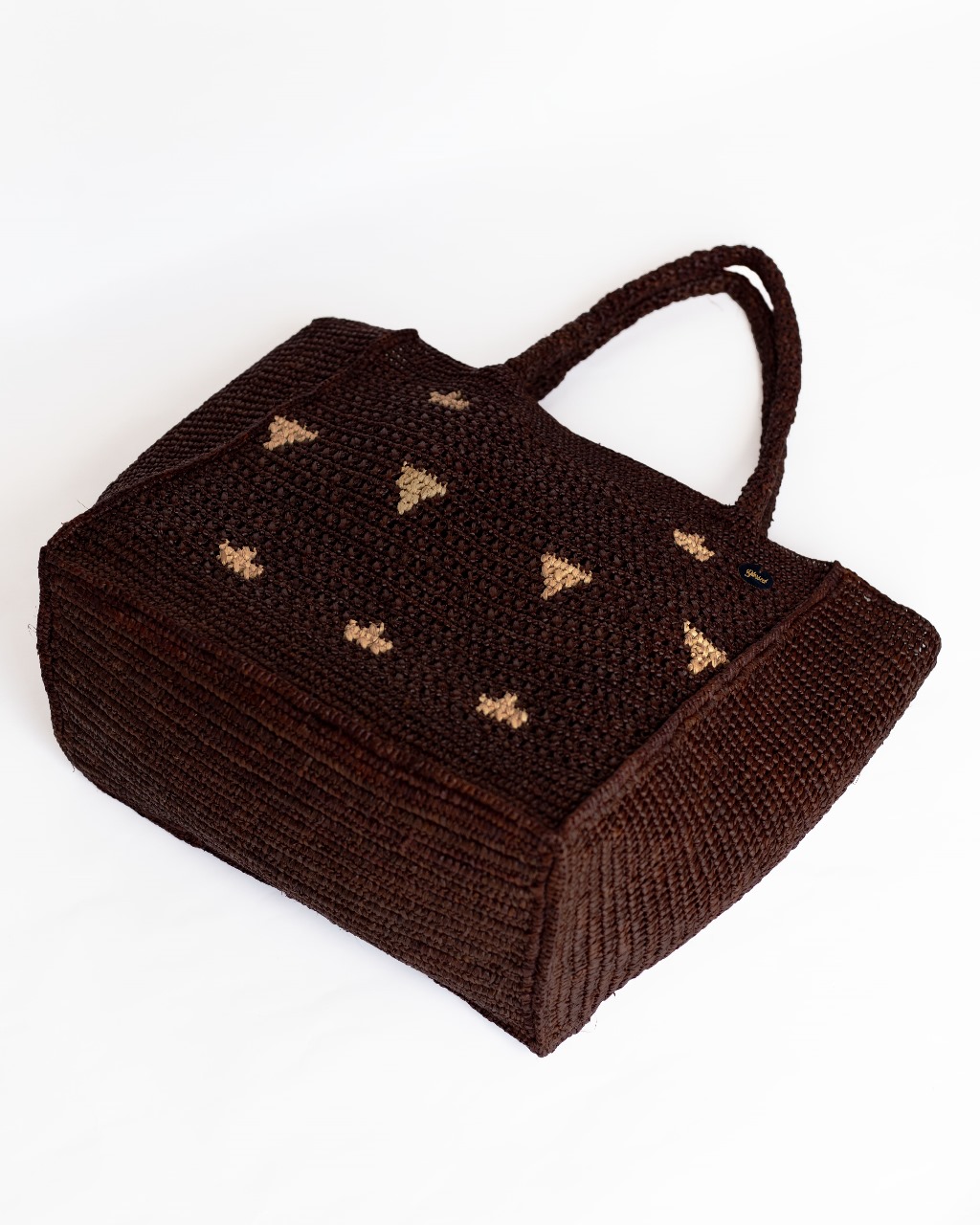
To illustrate this potential, let’s take the example of the BLESSED brand, which specializes in raffia accessories. Although this brand focuses primarily on crocheted bags and clutches, it demonstrates that raffia can have a place of choice in the fashion world. BLESSED’s expertise in working with raffia offers a clear vision of its potential in broader creations.
Handcrafted, responsible production
Every BLESSED piece is handmade by Malagasy craftswomen, guaranteeing a quality product that respects the environment and supports the maintenance of traditional know-how. This artisanal process creates unique accessories and enhances the value of local labor.
Design flexibility
In addition to its online collections, BLESSED also offers made-to-measure accessories, enabling customers to personalize their pieces to their own desires. This flexibility appeals to customers looking for exclusivity and originality.
An expanding market
With the growing appeal of handmade, eco-friendly products, BLESSED has succeeded in attracting a diverse customer base, from bohemian boutiques to concept stores specializing in handicrafts. The rise of responsible consumption is supporting this initiative and reinforcing interest in this type of product.
Why is this example relevant ?
✔ It proves that raffia is an exploitable material in fashion.
✔ It shows that positioning on high-end craftsmanship can be an opportunity.
✔ It opens up the idea of extending raffia to clothing, not just accessories.


The challenges facing the raffia sector in Madagascar: how can they be overcome?
How to overcome the challenges facing the raffia sector in…

Raffia and sisal : how do these two fibers complement each other in design ?
Contemporary design is increasingly favouring natural materials. Among the most…
7 Ways to Use a Sisal Clutch in Your Daily Life
In a daily life where natural materials are becoming central…