

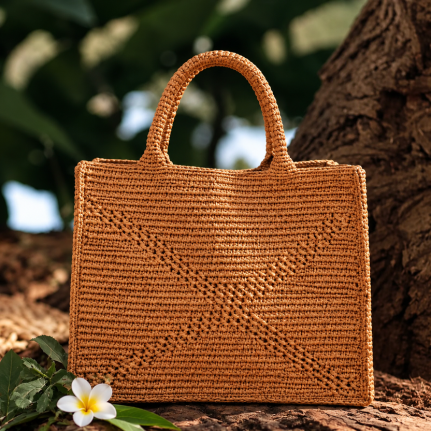
We come across it on handbags, hats or decorative objects, but we often know it… from afar. Raffia. This discreet yet precious plant fiber hides many secrets. At BLESSED, we’ve made it the heart of our designs, not only for its unique qualities, but also for what it embodies: a link between nature, culture and craftsmanship.
Ready to see this material differently ? Here are 9 surprising (and essential) things to know about raffia, the fiber that tells a story with every weave.
1. Raffia comes from a giant palm tree, a treasure of nature
Raffia is extracted from the leaves of the Raffia farinifera palm, a remarkable tree that can grow up to 20 meters tall. This palm tree, one of the largest in the world, unfurls impressive leaves, veritable giants that can measure several dozen meters.
What makes its harvest so special is the delicacy required: the leaves are cut by hand, with a skill handed down for generations, to avoid damaging the tree and preserve its natural cycle. This artisanal method is testimony to the intrinsic durability of the fiber we know as raffia.
2. Madagascar, cradle of exceptional raffia
Of all the regions where the raffia palm grows, Madagascar stands out in particular. The unique climate and the quality of the Malagasy soil enable the raffia to achieve a fineness and strength unequalled anywhere else in the world.
Malagasy raffia is renowned for its length and suppleness, essential qualities that explain its widespread use in local crafts, as well as in high-end international production. Coastal regions such as Maroantsetra and Vatomandry are the main breeding grounds, where entire communities make their living from the meticulous processing of this fiber.
3. A 100% natural, environmentally-friendly fiber
Unlike many industrial materials, raffia is an entirely natural, biodegradable plant fiber. It undergoes no aggressive chemical treatment during production, which considerably limits its ecological impact.
In addition to being renewable and easily recyclable, it helps preserve palm forests, as its reasoned harvesting encourages the sustainable management of natural resources. Today, this ecological choice is winning over more and more consumers in search of authentic and planet-friendly products.
4. Raffia is a healthy, hypoallergenic fiber
Another often overlooked advantage of raffia is its hypoallergenic nature. Contrary to certain synthetic or chemically-treated fibers, it doesn’t cause irritation or skin allergies.
Its natural, breathable texture keeps the skin cool, making it particularly suitable for accessories worn in direct contact with the body. This health benefit is a powerful argument, especially for those sensitive to conventional materials.
5. A fiber rooted in Malagasy culture
It’s not just for industrial or decorative use. In Madagascar, this fiber is an integral part of everyday life and tradition. For centuries, it has been used to weave mats, baskets, hats and ritual objects.
This cultural dimension is at the heart of a craftsmanship that has been handed down from generation to generation. It thus bears a living memory, a testimony to Malagasy identity, giving it a much deeper value than its purely material aspect.


6. A material with multiple forms and uses
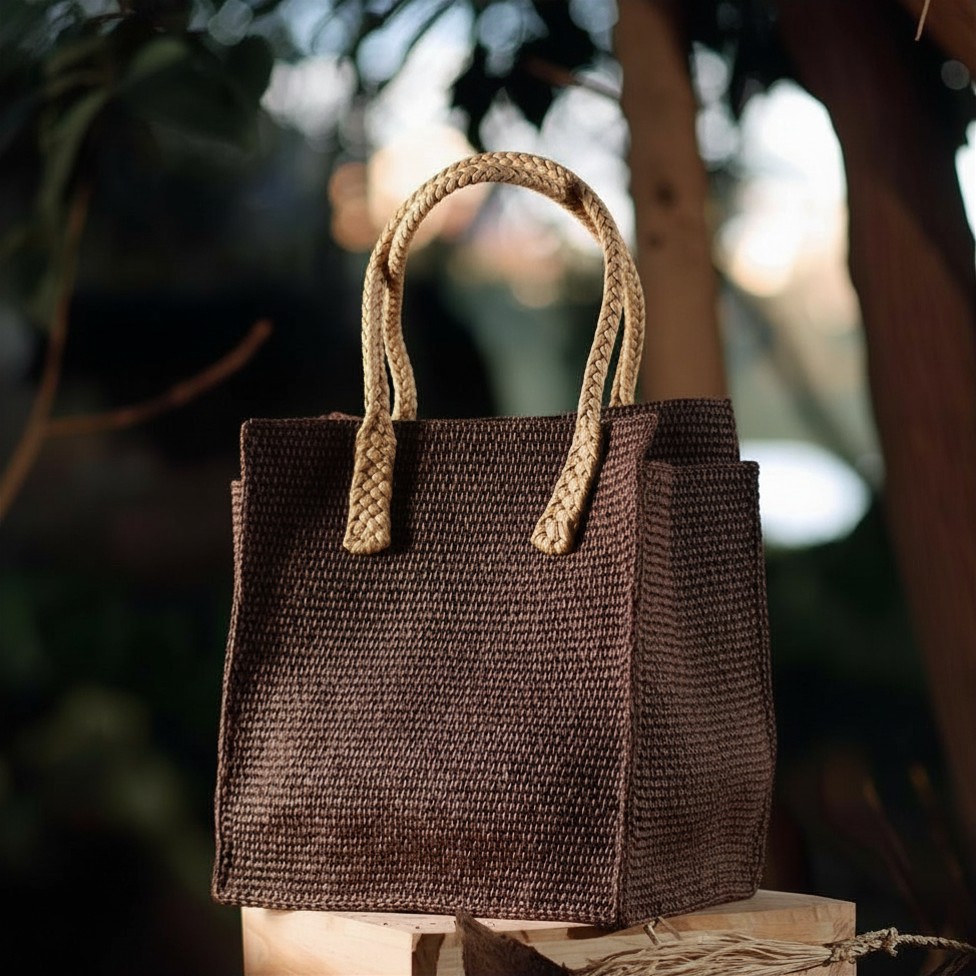
What makes it particularly fascinating is its ability to metamorphose according to the needs of artisans. It can be used as fine thread for delicate embroidery, wide ribbon for belts or braided strips for sturdy bags.
This great diversity of shapes gives designers a wide range of possible expressions, opening the door to limitless creativity. Raffia is both a material and a playground for the imagination.
7. Natural colors thanks to plant dyes
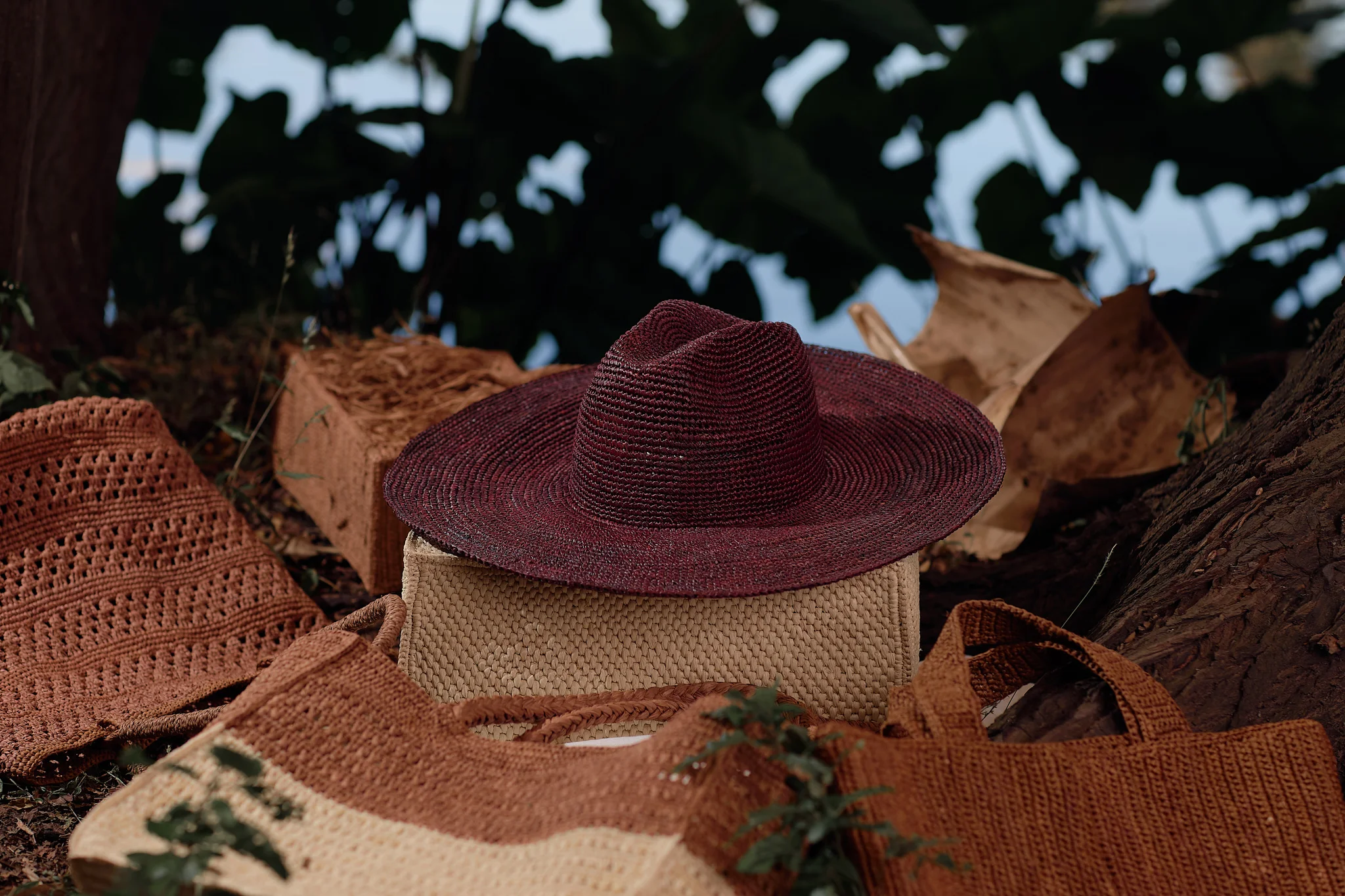
Raffia also has the advantage of being naturally dyed, thanks to ancestral processes using plants, roots or clay. These ecological dyes produce soft, rich and varied colors that respect both the fiber and the environment.
These unique shades, impossible to reproduce industrially, add extra soul to raffia creations, reinforcing their handcrafted, authentic character.
8. Each fiber is unique, each creation is singular
Because raffia is a natural fiber, it presents subtle variations in hue and texture depending on harvesting and region of origin. These differences make each raffia product unique and impossible to standardize.
This singular character enhances the value of handwork and gives each object its own personality, far removed from standardized industrial production.
9. Raffia is strong, light and ideal for everyday use
Finally, raffia combines sturdiness and lightness, two qualities that make it perfectly suited to everyday accessories. It withstands repeated handling without difficulty, while remaining pleasant to wear.
It’s easy to care for, and over time gains in beauty, patinating naturally without losing its properties. All the more reason to prefer raffia to less durable synthetics.
In conclusion
Raffia is a rare, precious, living material. It embodies everything we like to convey: beauty, durability, respect and uniqueness. To get to know it better is also to better understand why it inspires us so much.
Would you like to discover how this fiber takes shape in our hands ? Browse our raffia creations in our store, and let yourself be touched by a material that has so much to offer.
Why is raffia making a strong comeback in international fashion in 2026?
Long associated with local craftsmanship or summer accessories, raffia is…
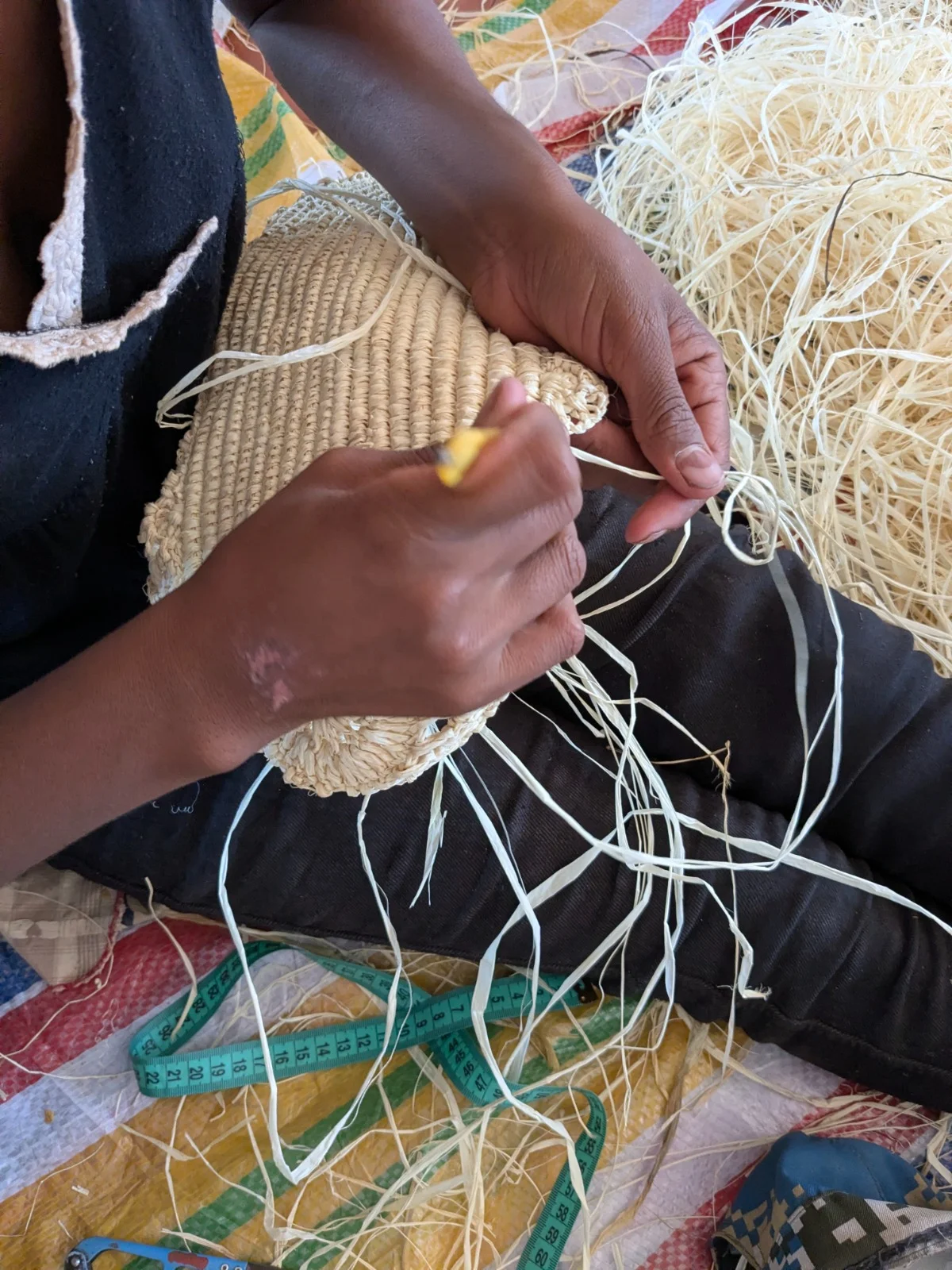
Behind a BLESSED accessory: the hands that create
Before becoming a bag, a basket or an accessory, every…
Handmade or machine-made: what consumers should know
In a world where everything moves fast, where industrial production…