



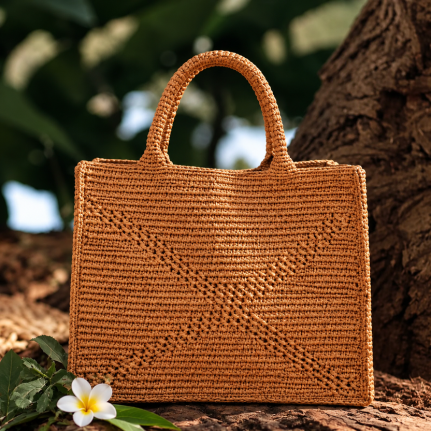
Faced with growing environmental challenges, the fashion industry is under pressure to innovate and offer sustainable alternatives. One of the most promising solutions to emerge in recent years is 3D printing. By limiting waste and enabling more precise and ethical manufacturing, this technology has the potential to transform the entire sector.
However, one important question remains: what would happen if natural materials were incorporated into this technological revolution? That’s where raffia comes in, a traditional material that could offer an innovative response to the ecological challenges of fashion.
Innovation at the service of sustainable fashion
The fashion industry, aware of its ecological footprint, is undergoing a major transformation. Creators, designers and manufacturers are looking for solutions to reduce the environmental impact of the clothing and accessories they produce. Among the many innovations being explored, 3D printing is emerging as a revolutionary technology.
Not only does it enable objects to be produced with great precision, it also optimises the use of raw materials, thereby reducing waste.
This technological advance is accompanied by the emergence of more responsible fashion.
It is in this context that the integration of raffia into 3D printing could become a catalyst for a greener, more sustainable future. Raffia, a natural material that has been used for centuries in crafts and fashion, could find new life in this transforming industry. This marriage of tradition and innovation would enable us to rethink the way we design clothing and accessories while respecting the environment.
3D printing in fashion : a sustainable revolution
3D printing is based on an additive manufacturing process, which involves creating objects by superimposing layers of material based on a digital model. This approach differs radically from traditional manufacturing methods, which often rely on cutting or assembling parts. With this method, precision is maximised and waste is considerably reduced.
The fashion industry has been quick to recognise the advantages of 3D printing, particularly for creating complex structures that are impossible to produce using conventional techniques. But what is the real strength of this technology in the textile sector?
Here are a few reasons why 3D printing has appealed to designers :
- Design freedom : it allows complex three-dimensional structures to be designed, whether for clothing or accessories. Shapes impossible to achieve with traditional techniques thus become possible.
- Reduced waste : Unlike traditional methods, which generate fabric scraps and other waste, 3D printing consumes only the amount of material needed to create an object. This means less waste and better resource management.
- Increased customisation : One of the major benefits of 3D printing is the ability to personalise creations. Consumers can now adjust the size, shape and design of their garments, not only avoiding waste but also creating unique pieces tailored to each individual.
Merging raffia and 3D printing: a realistic possibility ?
Combining raffia and 3D printing seems like an innovative idea, but it is not without its challenges. Although raffia is a natural material with interesting properties, its compatibility with 3D printers raises technical issues. However, several solutions are being studied, and promising advances have already been made.
One approach is to develop hybrid filaments, mixing raffia and biobased polymers. This combination would preserve the natural characteristics of raffia while making it compatible with 3D printers. This fusion of raffia and 3D printing opens the door to a multitude of creative uses in the fashion industry, such as :
- Making accessories : elements such as buttons, belt buckles or ornaments for bags and shoes could be 3D printed from raffia.
- Creation of decorative clothing : by combining traditional crafts with 3D printing technology, new decorative elements for clothing could emerge, while maintaining a minimal ecological footprint.


Challenges and limits: the obstacles to be overcome
Although the fusion of raffia and 3D printing is promising, a number of technical and economic challenges remain. So what are the major constraints still holding back this innovation ?
Technical constraints
- Adapting raffia for 3D printing : the main challenge lies in adapting raffia so that it can be transformed into a printable filament. This requires preserving its natural properties while making it malleable enough to be extruded by a 3D printer.
- Ensuring durability : it is also important to ensure that objects printed from raffia retain sufficient strength and durability to be used in clothing or accessories.
Economic barriers
- Development cost : the cost of hybrid materials, combining raffia and polymers, can be high, representing a brake on large-scale production.
Large-scale production : establishing mass production of 3D-printed raffia products would require significant investment in research and infrastructure.
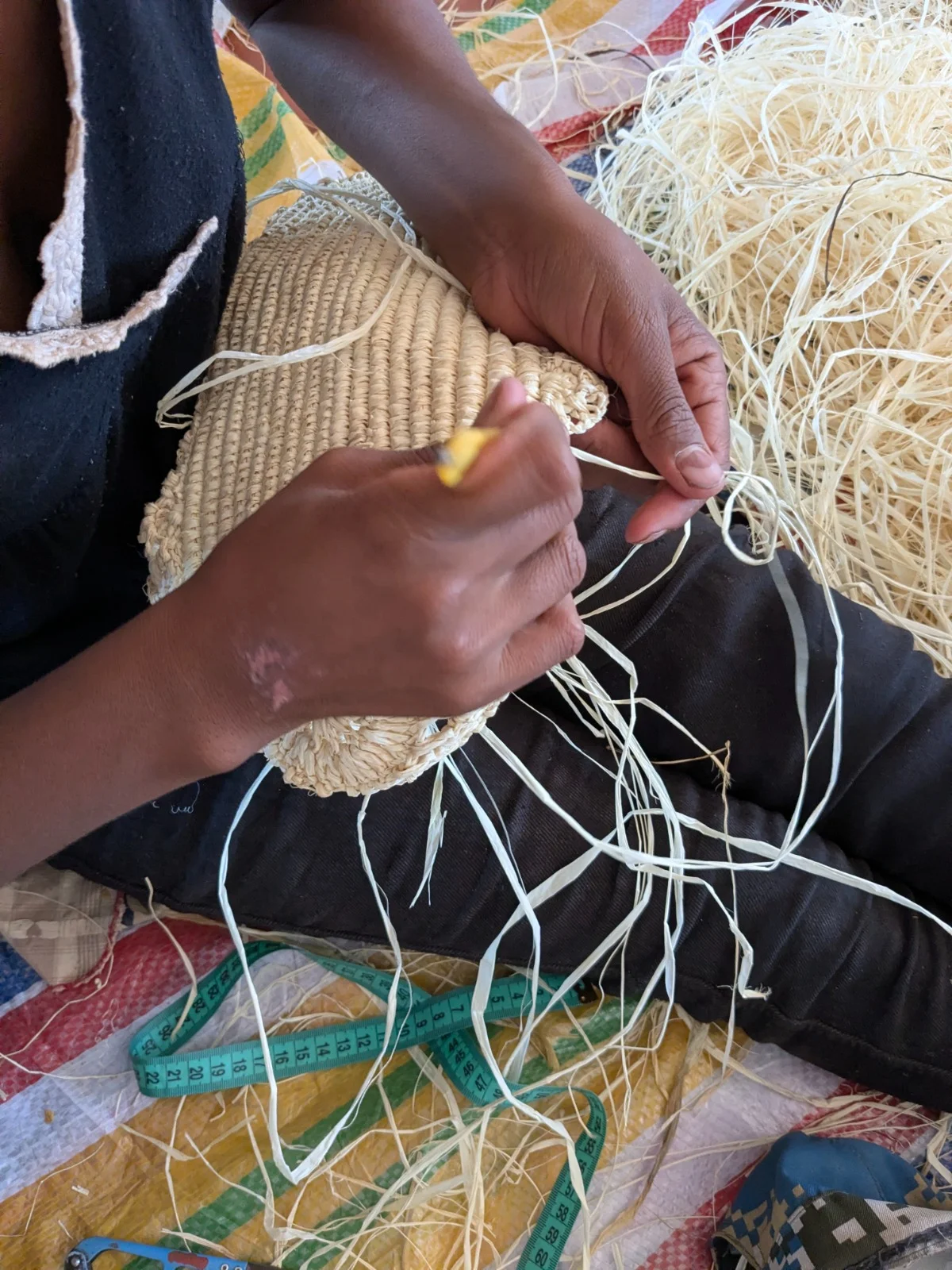
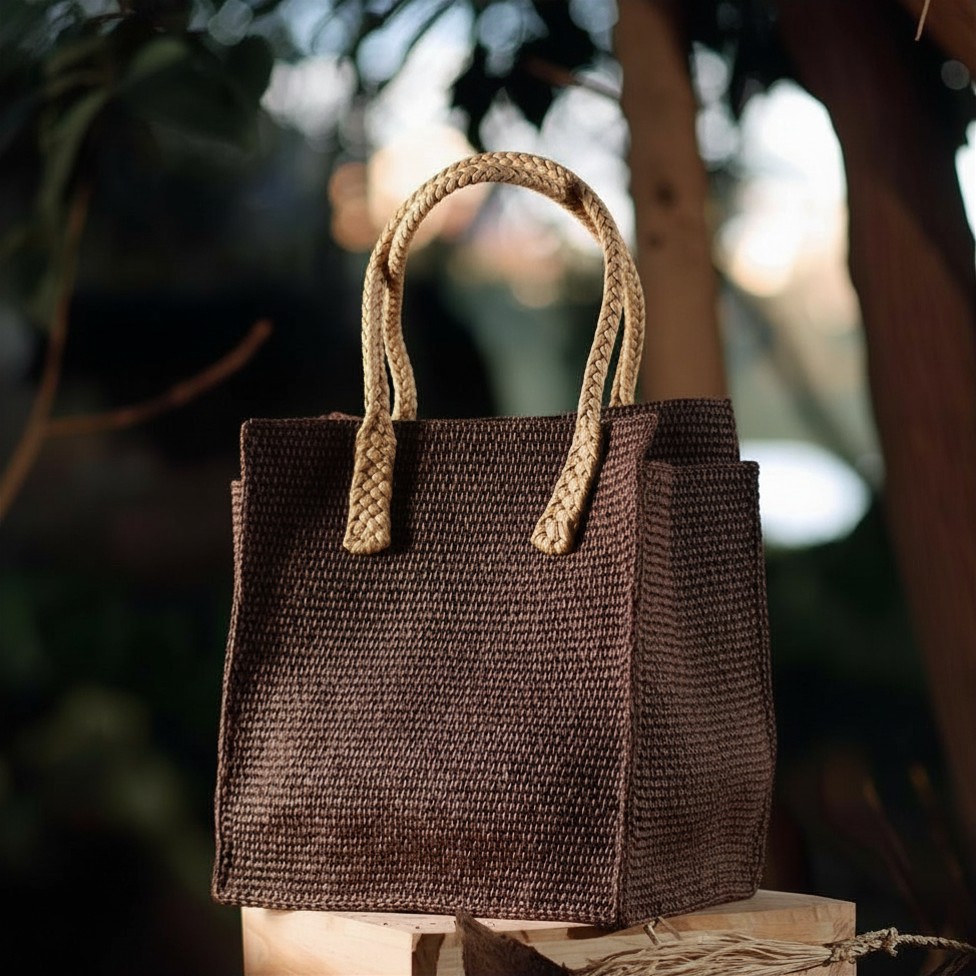

Why is raffia making a strong comeback in international fashion in 2026?
Long associated with local craftsmanship or summer accessories, raffia is…
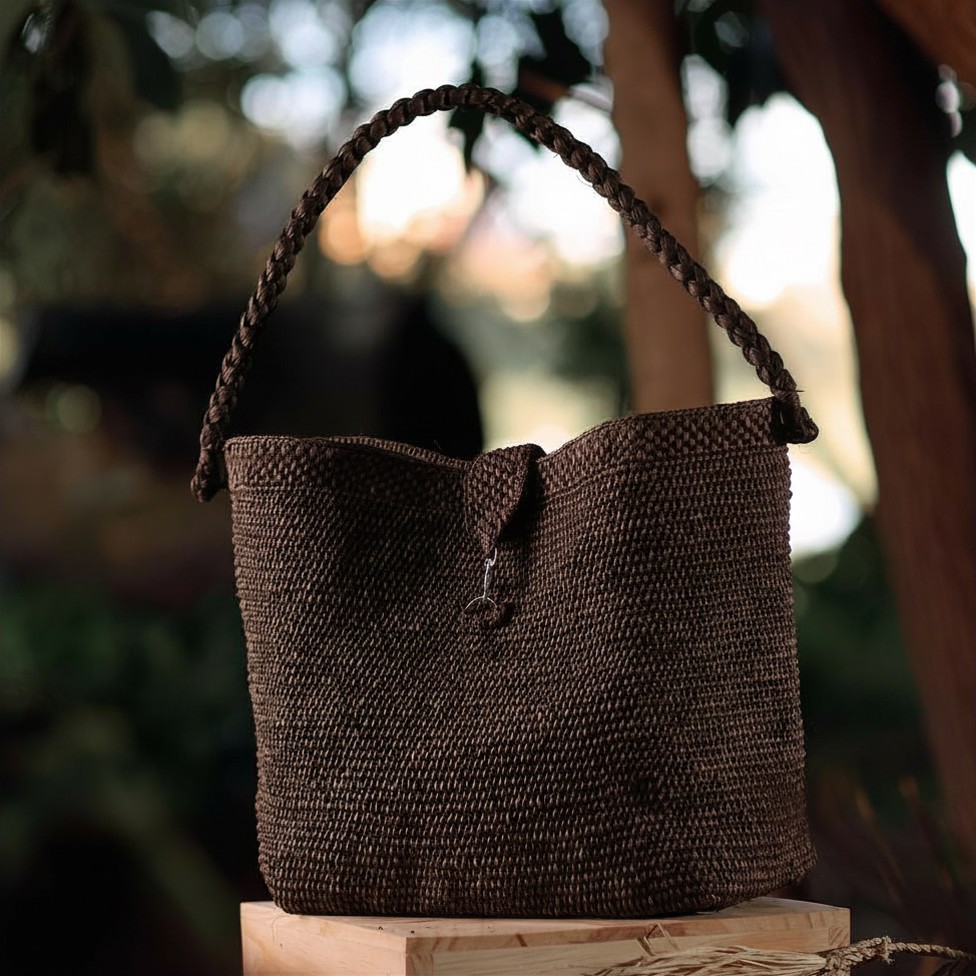
Behind a BLESSED accessory: the hands that create
Before becoming a bag, a basket or an accessory, every…
Handmade or machine-made: what consumers should know
In a world where everything moves fast, where industrial production…