



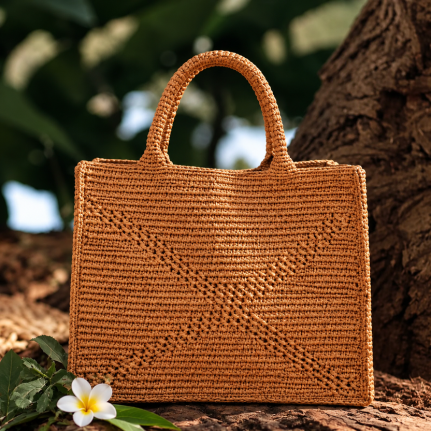
Natural fibers are present in our daily lives, whether in interior design, fashion accessories, or even eco-friendly packaging. Among them, raffia and jute stand out for their unique characteristics and varied uses. Choosing the right fiber for your project can seem complex, as each has distinct qualities that influence its aesthetics, durability, and workability.
In this article, we will explore these two fibers in detail, comparing their origins, properties, uses, and environmental impact, to help you make an informed choice for your creations.
Origin and botany
To fully understand the differences between raffia and jute, it is important to consider their origin and botanical composition, as this directly influences their properties and uses.
Raffia
Raffia is mainly native to Madagascar and certain regions of Central Africa. It is extracted from palm leaves, mainly the species Raffia farinifera, whose long leaves produce fine, flexible fibers.
These fibers, naturally beige to brown in color, have been used for centuries by artisans to create objects as varied as baskets, hats, and wall decorations. The exceptional length of raffia fibers, which can reach several meters, makes them a flexible and easy-to-work material, ideal for sophisticated handcrafted creations.
Jute
Jute, on the other hand, is grown mainly in South Asia, particularly in Bangladesh and India. It comes from the stems of plants such as Corchorus capsularis and C. olitorius. Unlike raffia, jute produces shorter, stiffer fibers, ranging in color from golden yellow to light brown.
This rigidity makes it particularly suitable for industrial uses, but less manageable for delicate craftwork. The history of jute is also linked to the textile and agricultural industries, where it has long been used to make sturdy bags, ropes, and mats.
While these differences in origin and plant type are clear, they are also reflected in the way the fibers are harvested and processed to make them usable.
Harvesting and processing
The processing of natural fibers is a fundamental process, as it determines the final quality and ease of handling of each material.
- Raffia : Harvesting begins with cutting the palm leaves. The craftsman then extracts the central fiber, cleans it, and leaves it to dry in the open air. Depending on its intended use, it can be dyed with natural dyes, often derived from local plants. This long and meticulous artisanal process preserves the fiber’s flexibility and length.
- Jute : Jute undergoes a different process. The stems are harvested and then immersed in water for “retting,” a method that separates the fibers from the stem. After several days, the fibers are extracted, dried in the sun, and spun into strong ropes or fabrics. This industrial process enhances strength but makes the fiber less flexible than raffia.
These harvesting and processing methods explain why raffia and jute have such different physical properties, which directly influence their end use.


Physical and mechanical properties
The physical characteristics of fibers determine their workability, durability, and the aesthetic appearance of creations.
| Feature | Raffia | Jute |
| Fiber length | Very long (1–3 m) | Plus courte (1–4 m par tige) |
| Texture | Supple, flexible | Rough, rigid |
| Resistance | Moderate | Very good for heavy loads |
| Elasticity | Average | Faible |
| Natural color | Light beige to light brown | Golden yellow to light brown |
| Water sensitivity | Good but needs maintenance | Sensitive to moisture |
Raffia stands out for its flexibility and length, which makes it easy to weave into complex shapes or incorporate into decorative projects requiring curves and fine details. Jute, which is more rigid, is perfect for creations requiring strength and durability, such as bags or rugs capable of supporting heavy weights.
These differences in properties are directly reflected in the possible uses of each fiber.
Main uses
Raffia
Thanks to its flexibility, raffia is a popular choice for crafts and decoration. Artisans use it to create baskets, hats, bags and unique accessories. In fashion, it is used for jewelry, belts, and slow fashion hats, where aesthetics and comfort are essential. Raffia also fits perfectly into interior design, offering a natural, bohemian style for wall hangings, planters, and decorative rugs.
Jute
Jute is mainly used in applications requiring strength and durability. It is ideal for making transport bags, ropes, and rugs. Its rigid appearance makes it less suitable for delicate decorative creations, but its durability and low cost make it a popular material in industry and for certain robust craft projects.
These specific uses highlight the advantages and disadvantages of each fiber.
Ecology and fair trade
Both fibers are natural and biodegradable, but their impact on the environment and communities differs.
- Raffia : often cultivated and processed by local artisans, it directly supports Malagasy and African communities. Fair trade guarantees a fair income and contributes to the preservation of traditional skills.
- Jute : its cultivation is often intensive, suited to industrial production. Although jute is biodegradable and environmentally friendly, it has less direct social impact on artisans than raffia.
These differences allow you to choose the fiber that is best suited not only to the use, but also to the ethics and sustainability of your projects.
Conclusion
In summary, raffia and jute each have their own unique qualities :
- Raffia = long, flexible, artisanal, and decorative fiber → perfect for decoration, accessories, and creative projects.
- Jute = short, stiff, industrial, and resistant fiber → ideal for sturdy bags, ropes, and rugs.
For your projects, choose raffia if you prioritize aesthetics, ease of use, and delicate creations. Opt for jute if you need strength and industrialization.
Why is raffia making a strong comeback in international fashion in 2026?
Long associated with local craftsmanship or summer accessories, raffia is…
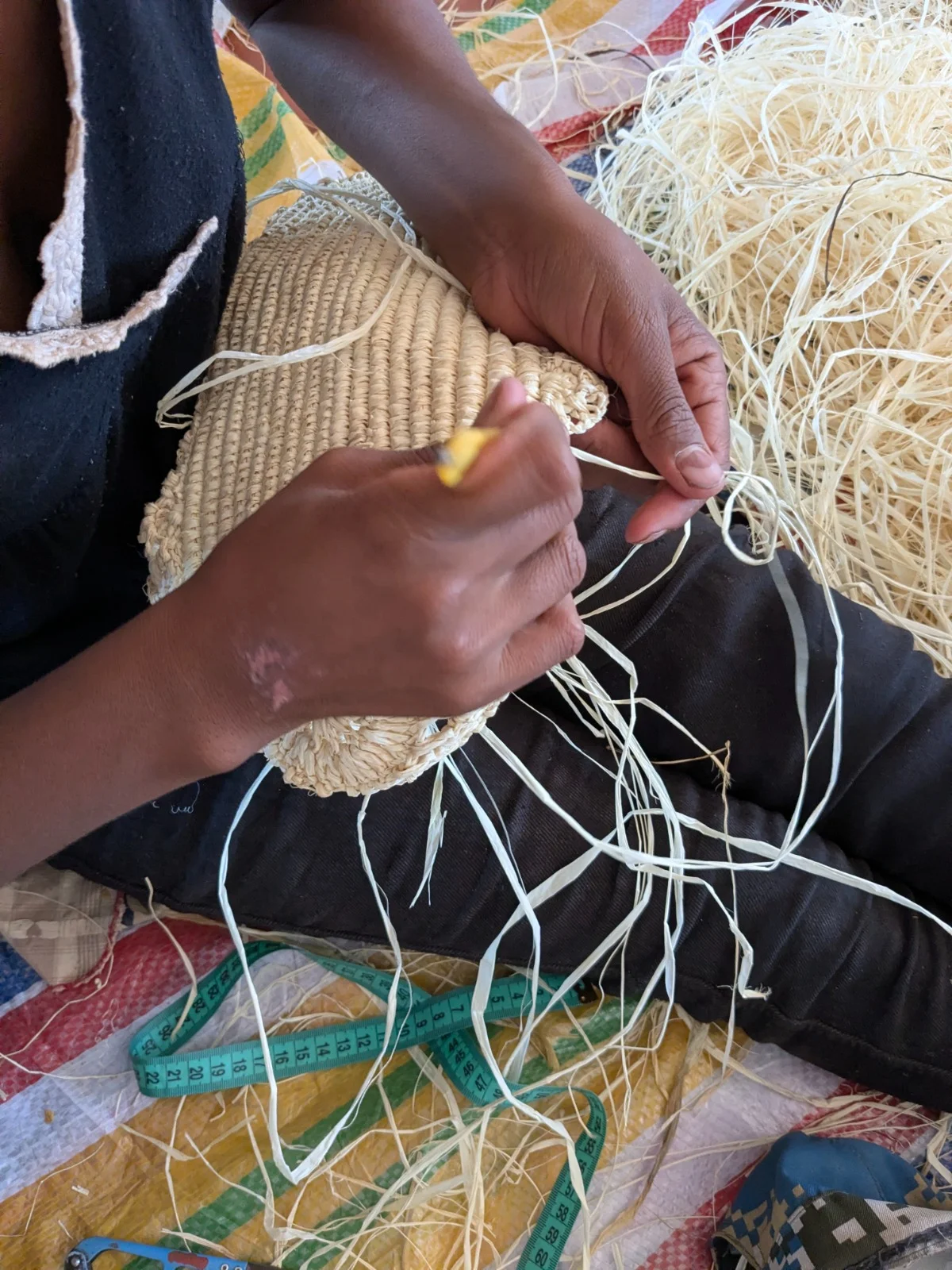
Behind a BLESSED accessory: the hands that create
Before becoming a bag, a basket or an accessory, every…
Handmade or machine-made: what consumers should know
In a world where everything moves fast, where industrial production…