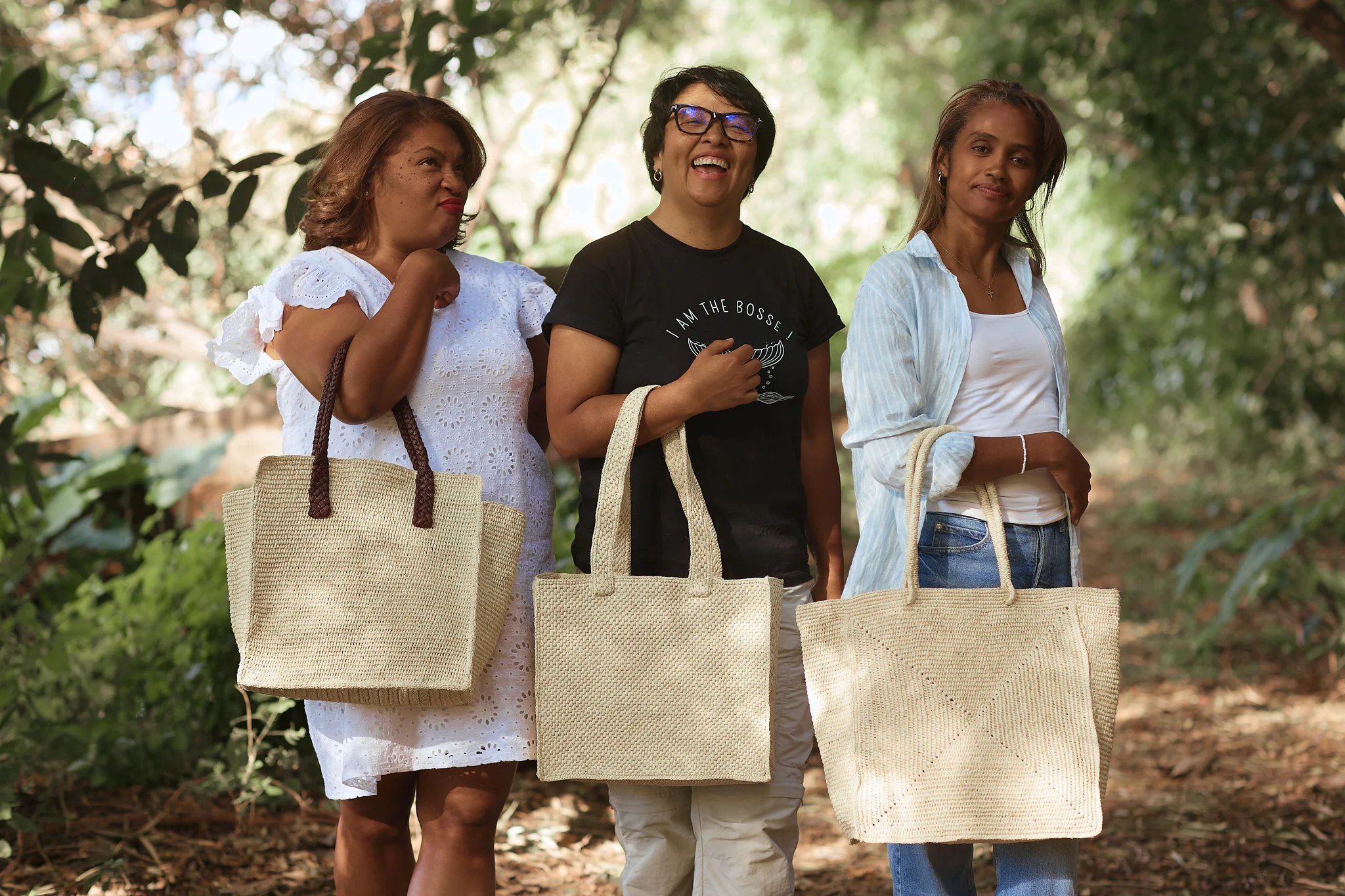
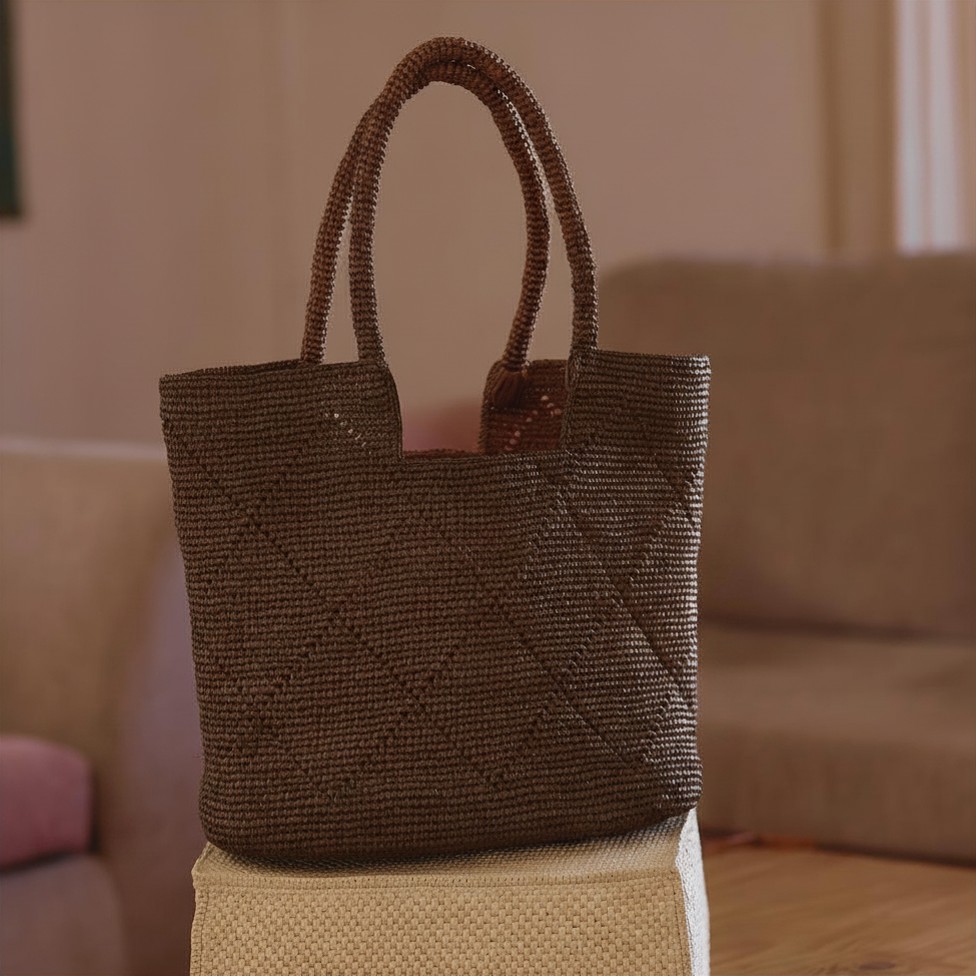
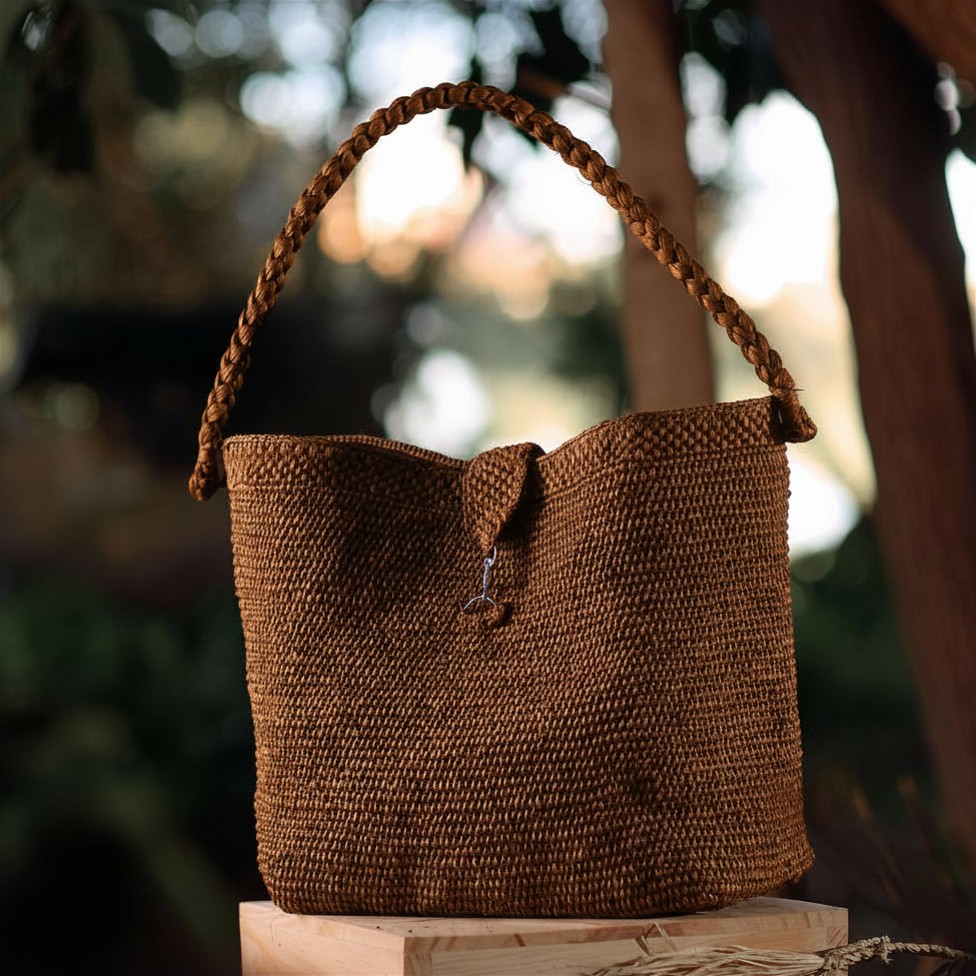
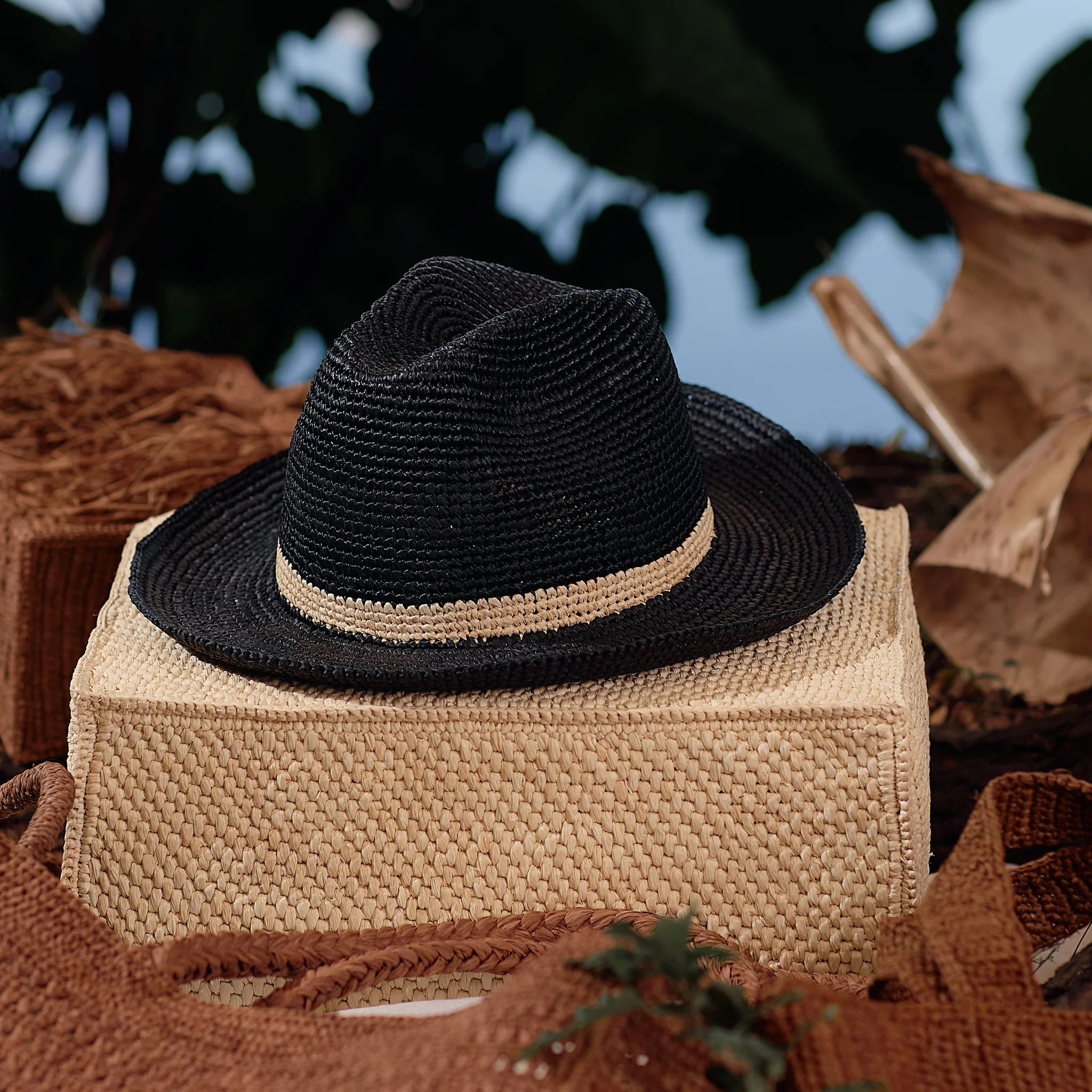
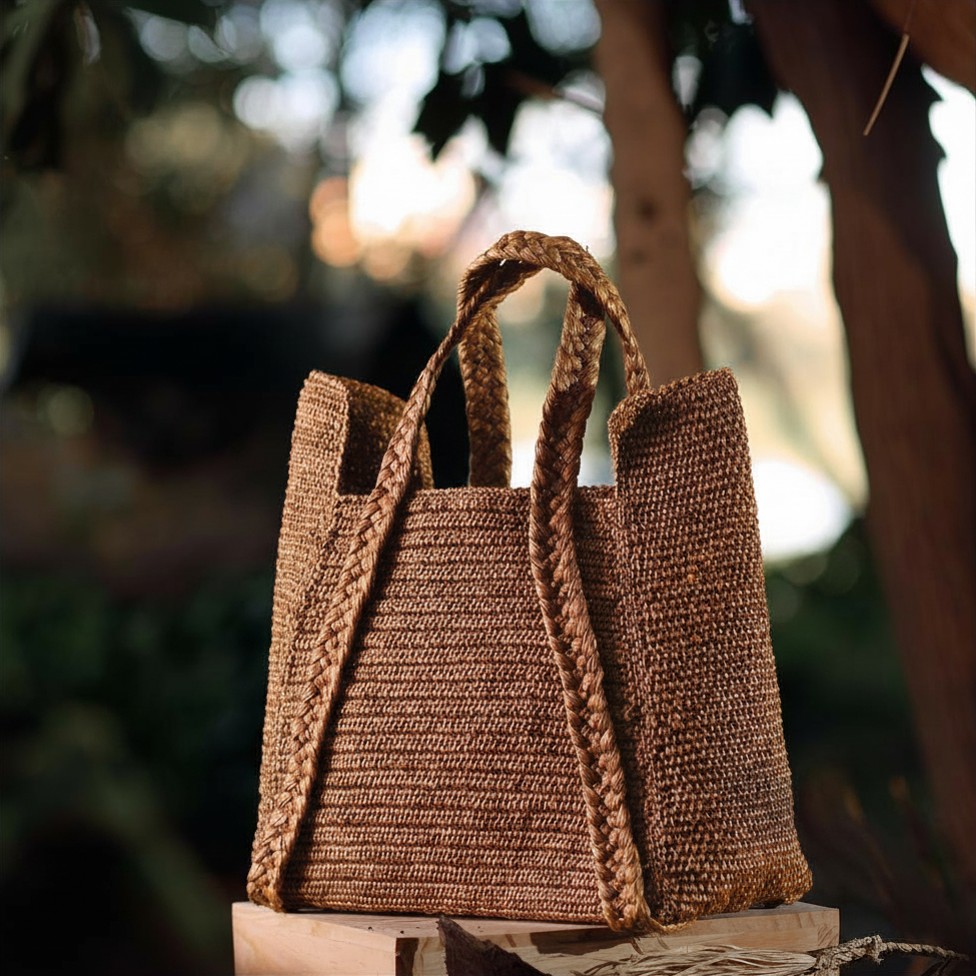
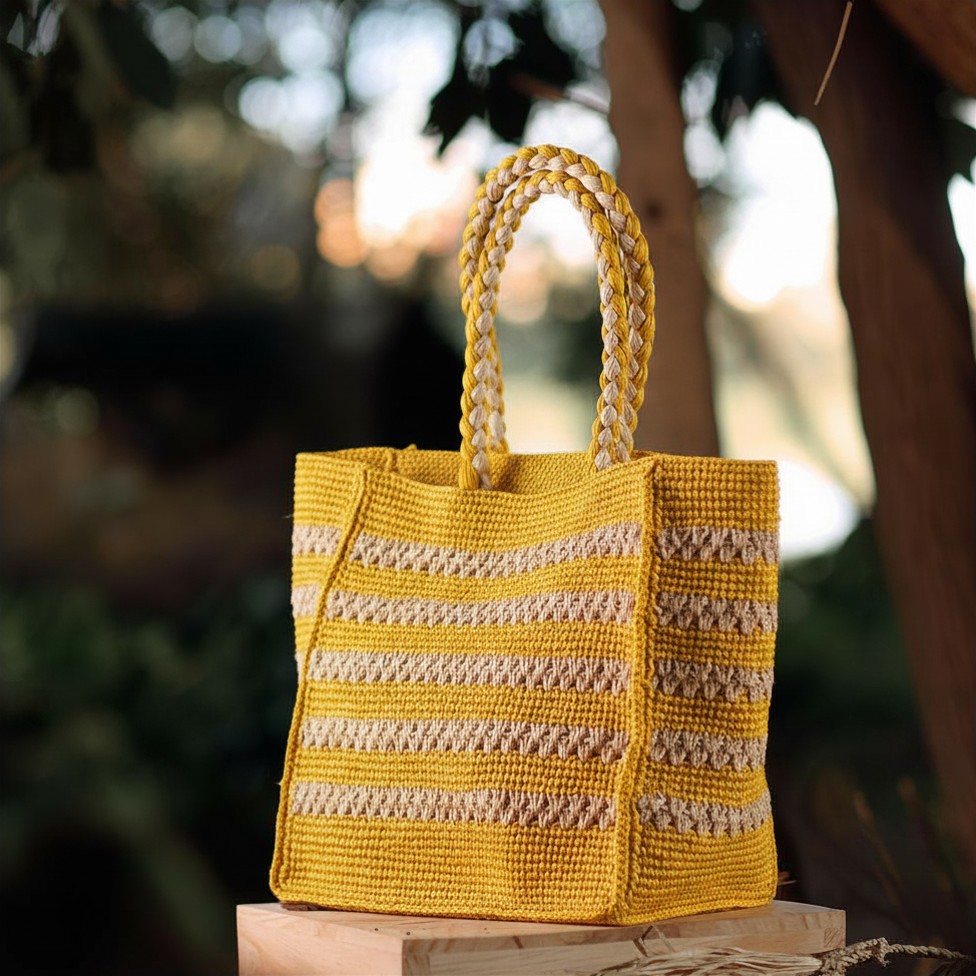
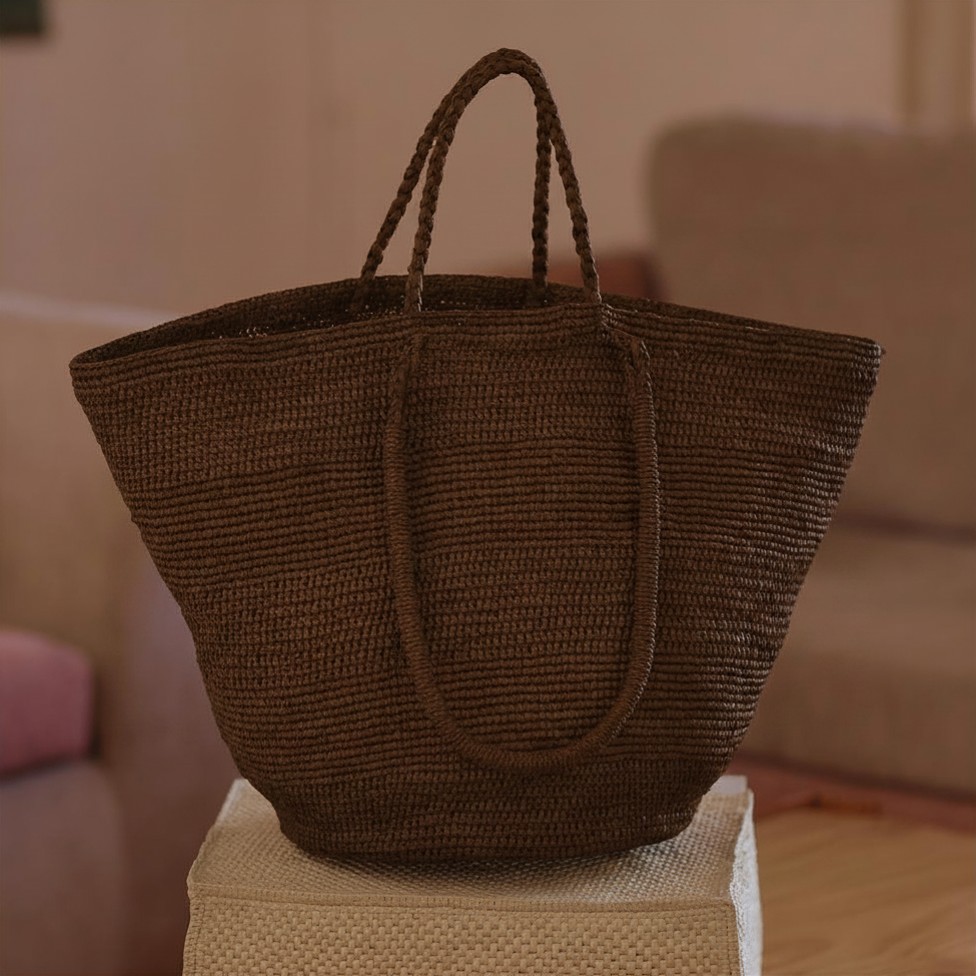
The shoulder strap is an essential element of a raffia bag. It must combine strength, comfort and aesthetics. To achieve this balance, Malagasy artisans use three main techniques: crochet, weaving and knotting. These ancestral methods not only ensure the strength of the fibers, but also add a unique aesthetic dimension to every BLESSED creation.
Crochet: precision and elegance
What is raffia crochet?
Crochet involves interlacing raffia fibers with a small hook, creating a continuous, flexible chain. This technique makes it possible to create strong, supple and visually appealing shoulder straps, suited to the weight of bags and everyday use.
Advantages of crochet
- Flexibility and comfort: the strap sits comfortably on the shoulder without collapsing.
- Strength: the continuity of the fibers limits breaking points.
- Custom design: unique patterns and textures can be created through crochet.
Rooted in Malagasy artisanal craftsmanship, BLESSED highlights exceptional local know-how, carried by skilled, patient and passionate hands. Malagasy crochet stands out for its finesse, regularity and attention to detail, making each creation a unique piece, both elegant and timeless.
-> Discover crochet through this article: The Art of Malagasy Crochet: Tradition and Ethical Fashion
After the delicate precision of crochet, working with raffia invites us to explore another form of artisanal expression: weaving. Where crochet builds stitch by stitch, weaving interlaces, crosses and assembles the fiber to give it strength and structure.
In the making of a raffia shoulder strap, each technique plays a role. Crochet brings finesse and flexibility, while weaving strengthens the structure and durability. This is a natural transition, dictated by the material itself: raffia, a living and resilient fiber, perfectly suited to these ancestral gestures passed down through Malagasy craftsmanship.
Weaving: multiplying strength
The weaving technique
Weaving consists of interlacing several strands of raffia to distribute tension across the entire shoulder strap. A tightly woven braid can triple the strength of a strap while maintaining a natural and elegant appearance.
Types of weaving
- Flat weaving: perfect for slim and elegant shoulder straps.
- Round weaving: ideal for robust straps capable of carrying more weight.
- Cross weaving: a traditional Malagasy technique inspired by baskets and utilitarian bags
-> Spiral braiding vs flat braiding: what are the differences in terms of strength?
After the structuring rhythm of weaving comes an equally essential step in making a raffia shoulder strap: knotting. Where weaving organises the fiber and gives it strength, knotting fixes, secures and completes the whole.
The transition from weaving to knotting marks a subtle change in the artisanal gesture. Movements become more precise and focused. Each knot is carefully considered, placed and tightened, as it plays a key role in the durability and functionality of the strap.
Knotting: the art of reinforcing the structure
Why knotting is essential
Knotting strengthens the critical points of the shoulder strap, such as attachments to the bag or internal reinforcements. It prevents fiber deformation under tension and ensures the longevity of the accessory.
Knotting techniques used by BLESSED
- Flat knots: for a discreet and elegant finish.
- Decorative knots: add an artisanal motif while reinforcing the structure.
- Internal knotting: strengthens the strap without affecting the exterior design.
Why do these techniques make the difference?
The combination of crochet, weaving and knotting creates shoulder straps that are not only beautiful, but also functional and durable. At BLESSED, each strap:
- supports several kilograms without deforming,
- remains supple and comfortable to wear,
- showcases Malagasy artisanal know-how while adapting to contemporary trends.
We also invite you to explore the different raffia-working techniques to better understand why these methods truly make a difference.
Between tradition and modernity
The artisanal techniques of crochet, weaving and knotting have been passed down from generation to generation in Madagascar. At BLESSED, they are modernised to meet the demands of contemporary design, offering shoulder straps that blend tradition, style and durability.
Tips for caring for your raffia shoulder strap
- Avoid prolonged exposure to moisture to preserve fiber flexibility.
- Clean gently with a dry or slightly damp cloth.
- Avoid excessive loads, even though BLESSED straps are very strong.
- Store flat or hanging to prevent forced creases.
To properly care for your shoulder strap and other accessories, we have selected these articles to help you:
– How to protect your raffia bags and accessories in the rain?
– SOS wet bag: what to do if your raffia bag gets wet in the rain?
Conclusion
A BLESSED raffia shoulder strap is not just an accessory: it is the result of ancestral techniques, Malagasy know-how and a commitment to durability. Crochet, weaving and knotting come together to create unique, aesthetic and robust pieces, ready to accompany your bags on all your everyday adventures.