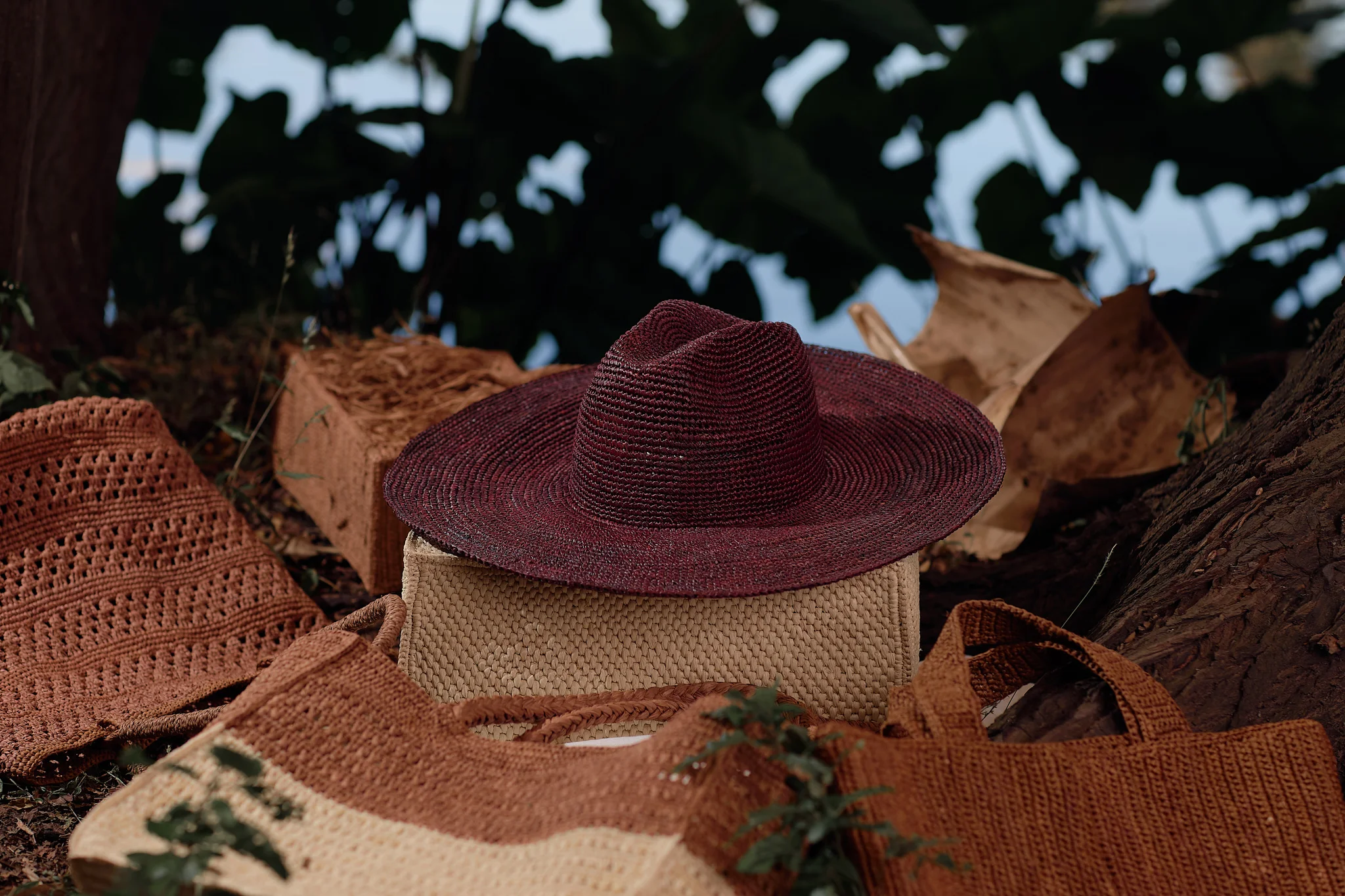
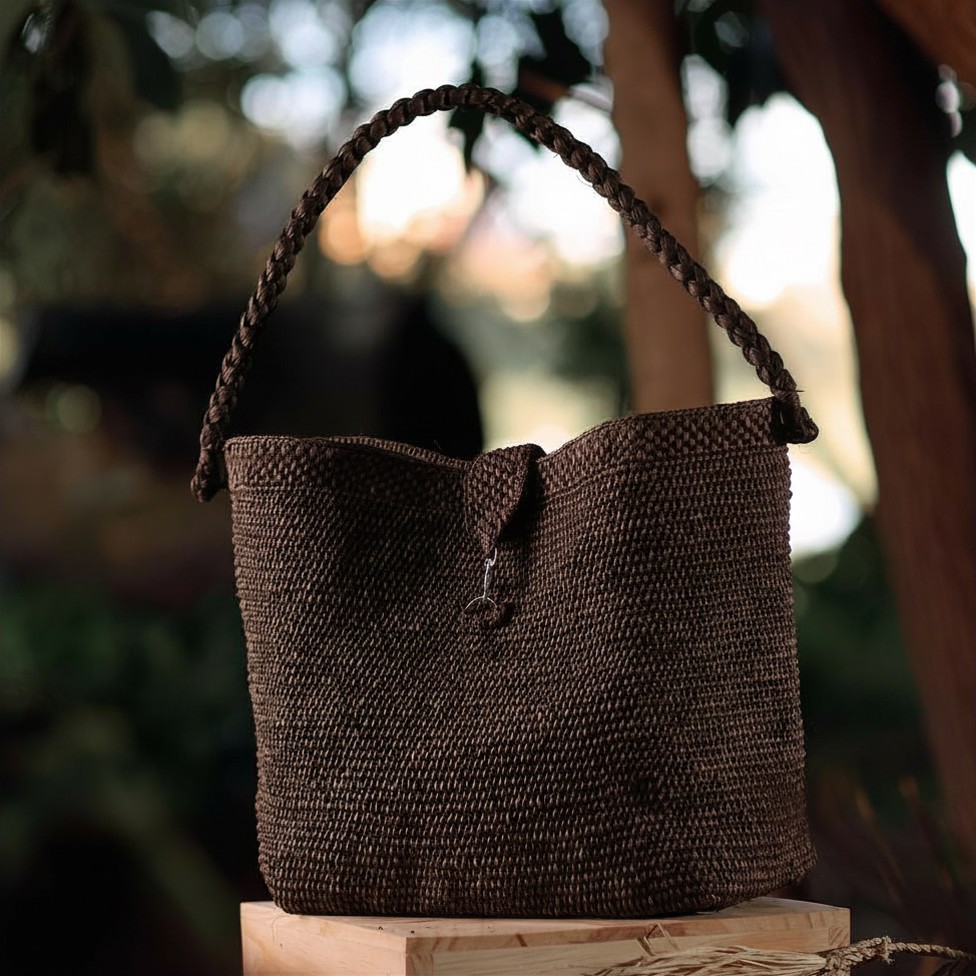
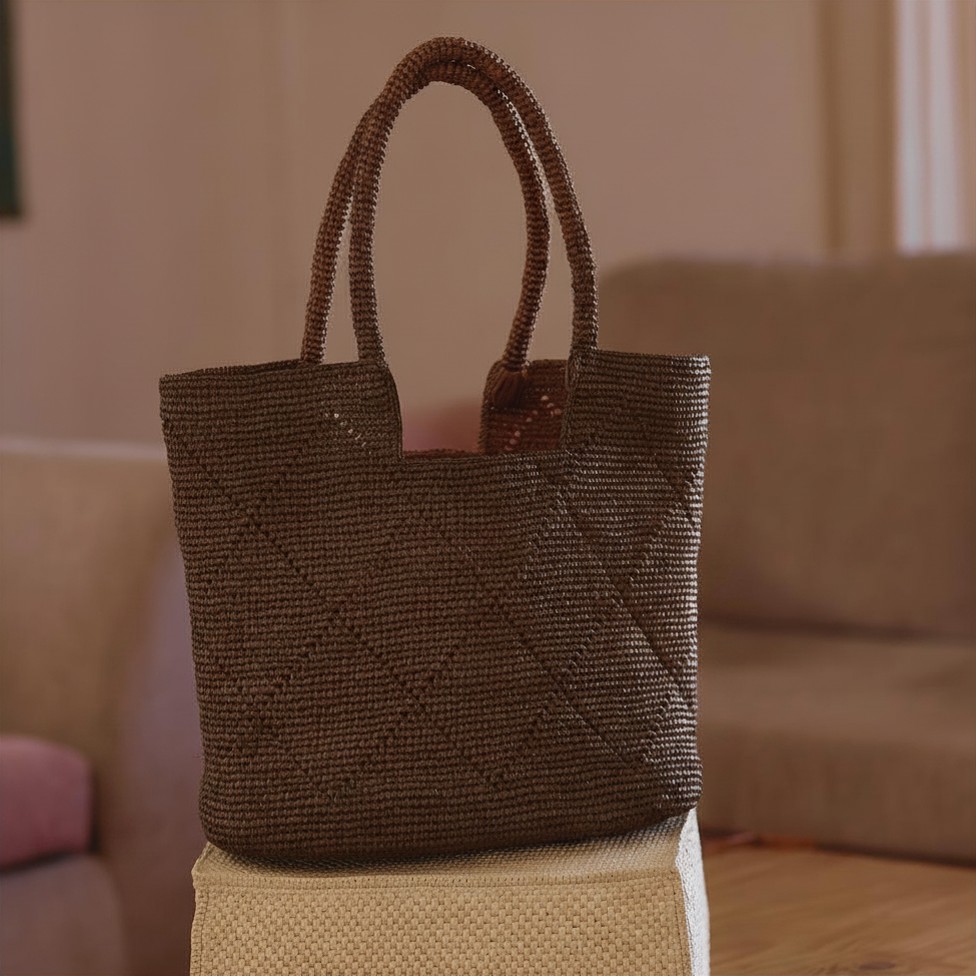
Contemporary design is increasingly favouring natural materials. Among the most appealing of these, these fibers stand out for their authenticity and character : raffia.
Each has a strong identity, but it is their combination that really catches the eye : contrasts, complementary textures, visual balance… Together, they offer a rare harmony, capable of transforming both a fashion accessory and a decorative piece.
To understand why their combination works so well, just look at what each fiber brings to the design : softness, texture, structure, warmth… A complementary relationship that continues to inspire artisans and designers.
Fibers with complementary characteristics
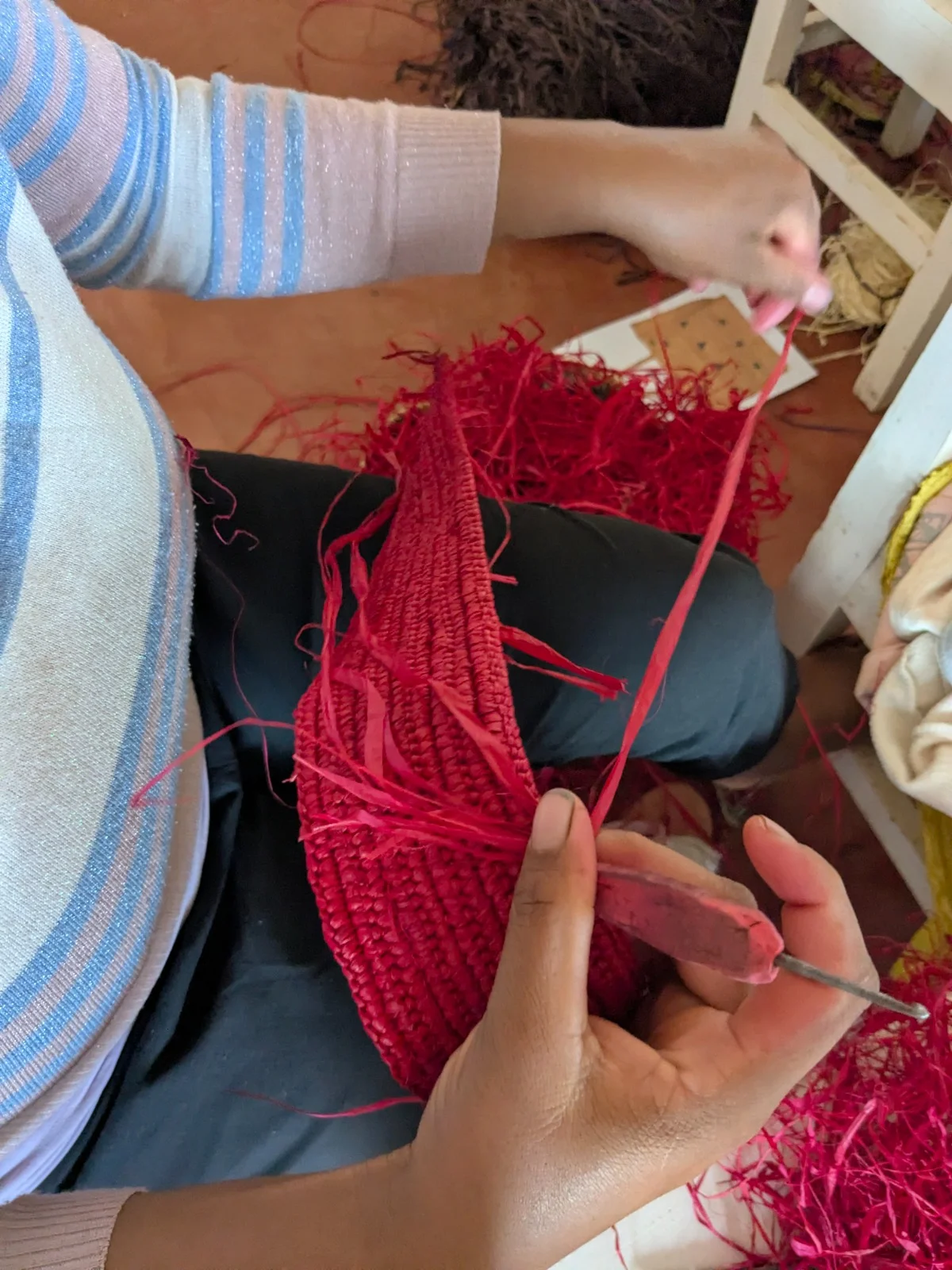
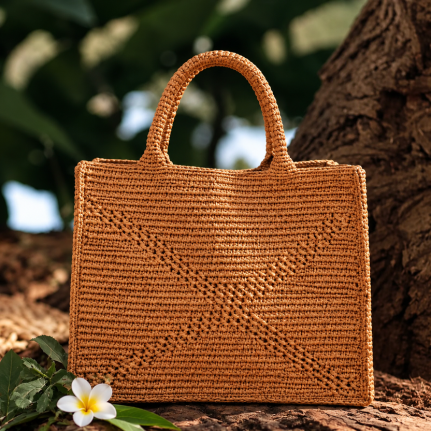
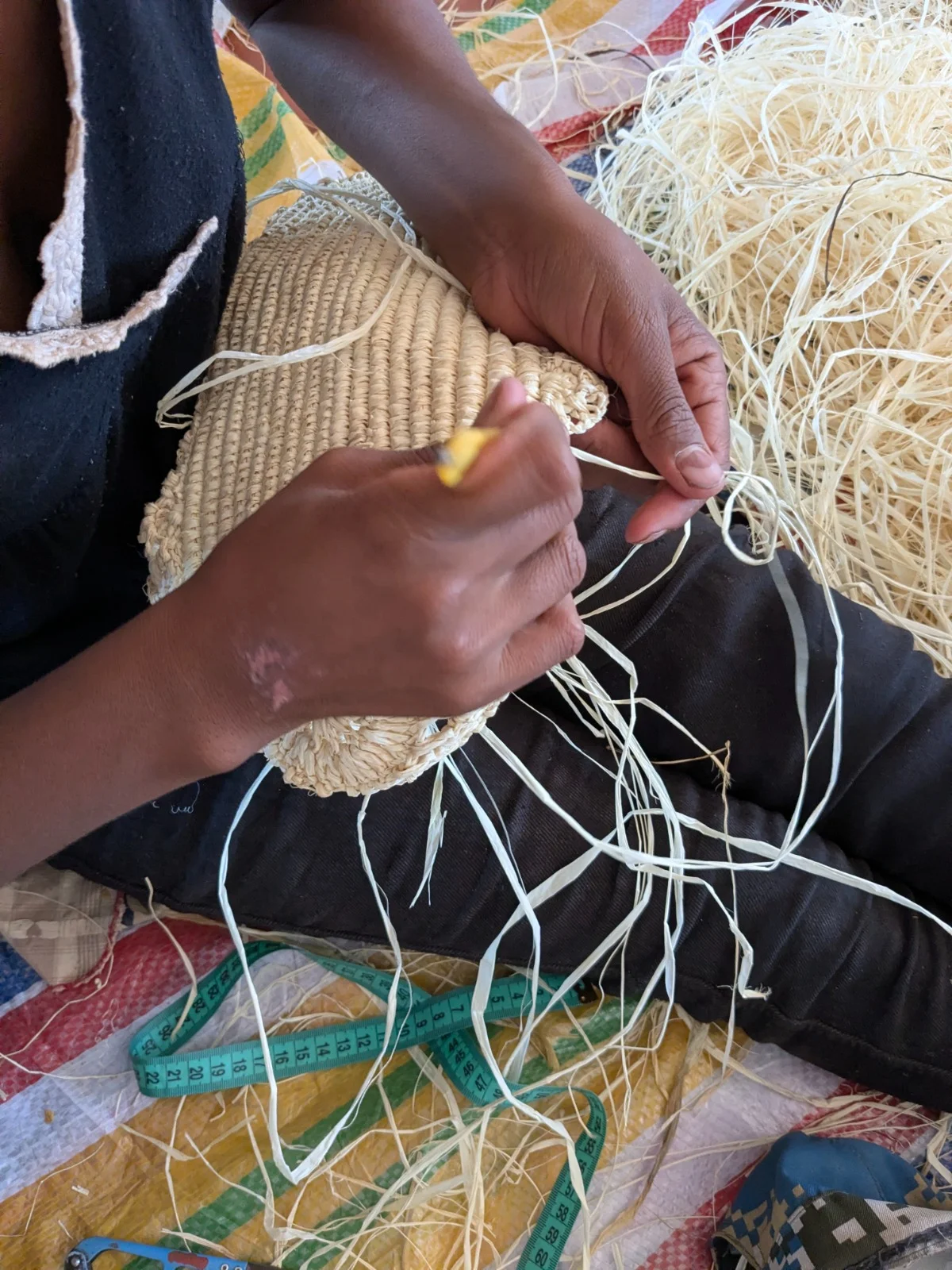
Raffia is known for its softness and flexibility. Derived from the leaves of the Madagascar palm tree, it is a lightweight fiber that is easy to dye and ideal for delicate items such as bags or pouches.
These different characteristics do not set them apart; on the contrary, they complement each other in a way that increasingly inspires designers and artisans. The delicacy of raffia softens the more assertive presence, naturally creating a harmonious duo.
Why do raffia and other creations go so well together in design ?
This complementarity is first apparent in their textures.
Raffia adds a fluid, light touch, while sisal has a more pronounced texture. Together, their contrasts visually enrich any creation.
But it’s not just about texture : it’s also a play on colours and uses.
Raffia lends itself easily to colourful palettes, while other creations retain more subdued natural shades. This contrast allows for the creation of objects that combine softness, structure and sophistication.
And since their uses are not the same, combining them becomes even more interesting :
- Raffia embellishes.
- Other material strengthens.
- The result : pieces that are as beautiful as they are useful, gaining in both style and durability.
Where is this combination most commonly found ?
Fashion is undoubtedly the first area where this alliance is evident.
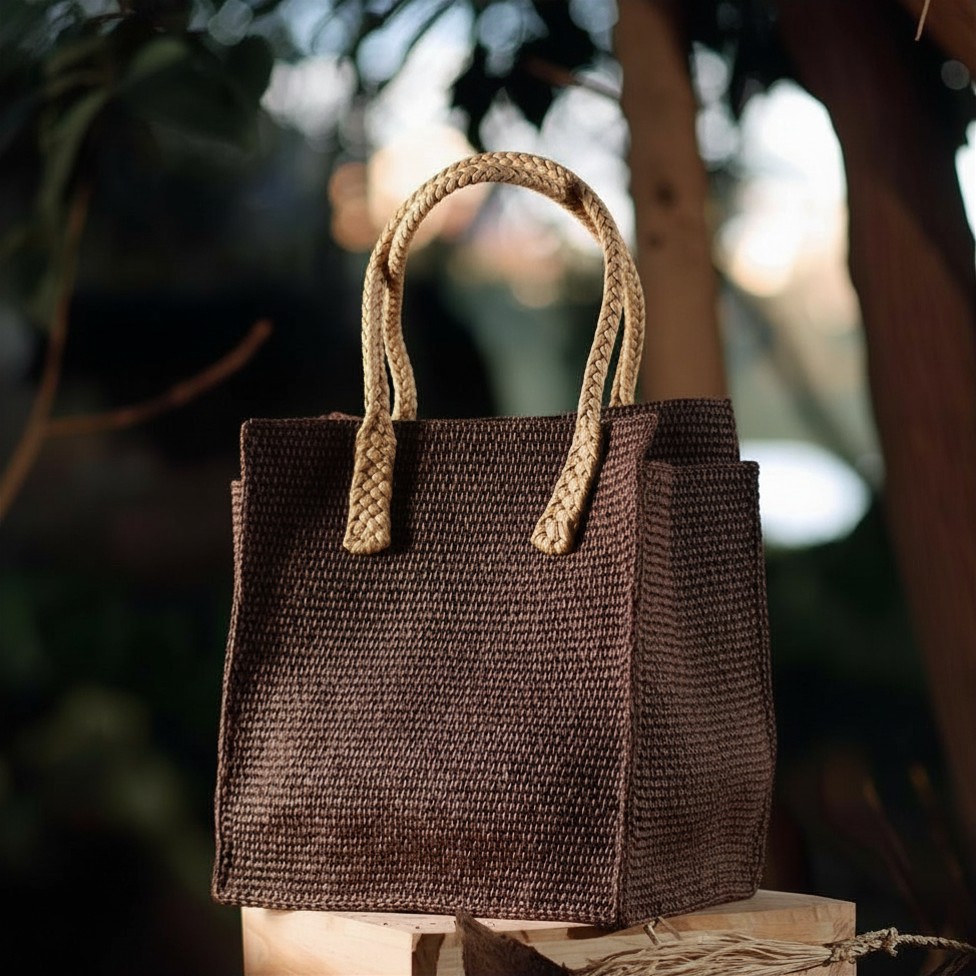
A raffia bag can be reinforced with a sisal base or handles, adding both elegance and strength.
Conversely, a bag made mainly of sisal can be softened by raffia patterns or finishes.
This harmony is also reflected in interior design. Baskets combining soft and structured fibers, woven light fixtures made from mixed materials, and plant pot covers combining rigidity and lightness have become very popular.
Finally, even handcrafted furniture is embracing these combinations. Some workshops combine sisal and raffia in seats, hanging decorations and decorative objects, creating unique pieces where every detail tells the story of the craftsmanship that went into them.
An encounter rooted in Malagasy expertise
This combination works so well because it is based on a tradition of craftsmanship that is deeply rooted in Madagascar.
Local artisans have long mastered the art of blending different fibers to strengthen, decorate or enhance their creations.
Every weave, every pattern, every shade reflects a technique passed down from generation to generation.
The combination of raffia and sisal is therefore not just a design trend : it is a tradition, a craftsmanship language that continues to inspire designers, creators and lovers of authentic materials today.
Why is this combination so appealing to modern designers ?
This duo ticks all the boxes of contemporary design :
- A natural aesthetic.
- Real sustainability.
- A responsible approach.
- And visually rich rendering.
Raffia offers poetry and softness; sisal provides balance, structure and strength.
By blending them, designers create unique pieces where each fiber has its place, its role and its character.
Their union reflects the current quest for authenticity : objects that are not merely decorative, but tell a story.
In short, Malagasy crochet art : tradition and ethics
Conclusion
Raffia and sisal are not opposing materials : they are two sides of the same natural world, that of artisanal design. Their combination creates beautiful, sturdy, inspiring objects that embody the warmth of natural fibers and the finesse of Malagasy craftsmanship.
For designers and consumers alike, this combination represents much more than a trend : it is a way of celebrating craftsmanship while bringing elegant, modern and sustainable pieces to life. To discover these authentic pieces, contact BLESSED now.