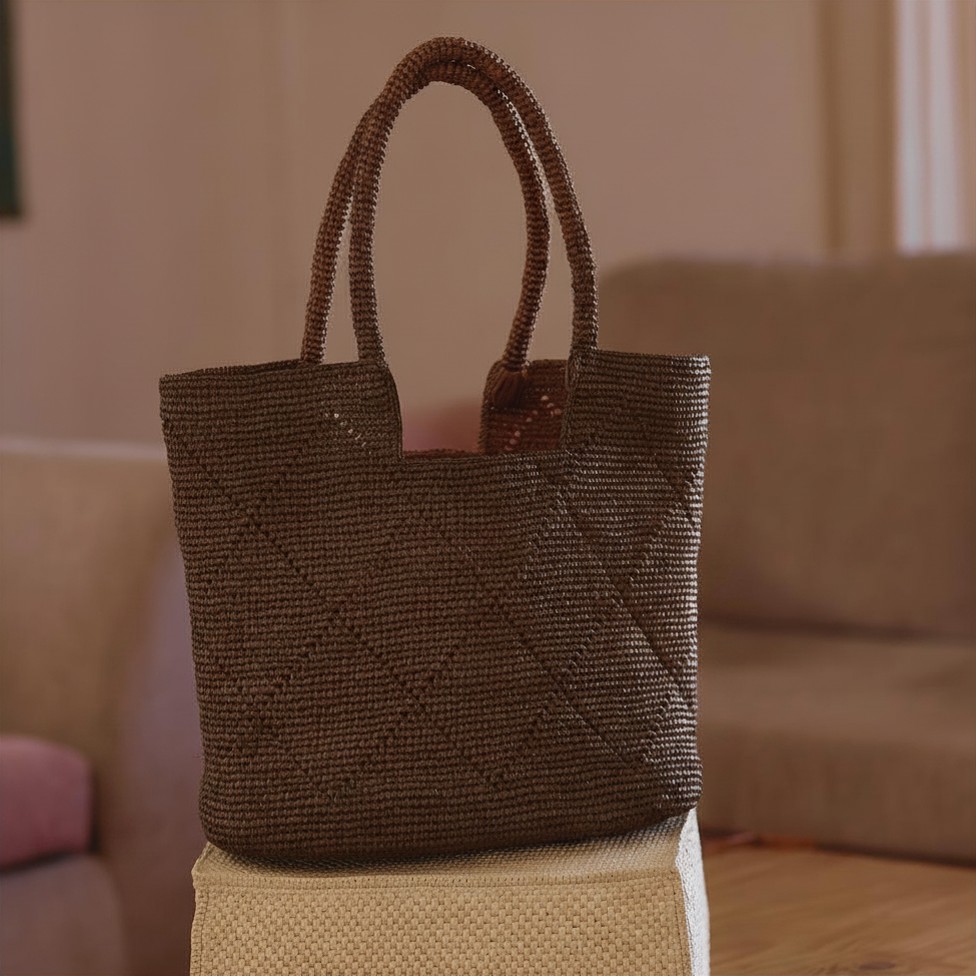
A carefully adapted treatment method produces raffia that is stronger, more stable, and long-lasting.
At BLESSED, every creation in raffia, whether a bag, clutch, shoulder strap, basket, or hat follows a true journey. A journey that begins long before the workshop, in the Malagasy wilderness, and continues well beyond its use, returning to the earth. Understanding this cycle is key to appreciating the value of an authentic, renewable, and environmentally friendly material.
Lifecycle of a raffia bag: from raw material to finished product
From the heart of the raffia palms to the artisans’ workshops, the lifecycle of a raffia bag is a true story of transformation. It all starts with a natural fibre, carefully harvested and dried, then treated to become more flexible, resilient, and ready for weaving. In the skilled hands of the artisans, this raw material is transformed, coloured, braided, and shaped to create a durable, lightweight, entirely handmade bag. Understanding this process is a way to discover a unique, eco-conscious craft, deeply rooted in Malagasy culture.
1. At the source: a fibre from a generous palm
At its source, this natural material comes from a fibre derived from a generous palm. It all begins with Raphia farinifera, a palm native to the wet regions of Madagascar. This palm produces long, strong, and naturally renewable leaves. It is from these leaves that raffia fibre is extracted, forming the foundation of all BLESSED creations.
The harvest is carried out responsibly: only mature leaves are collected, allowing the palm to continue growing. From this very first step, the sustainability of our products is ensured.
2. A harvest conducted in harmony with nature
The harvesting of mature leaves is carried out with full respect for nature. Raffia is cut exclusively by hand, using skills passed down through generations. Without heavy machinery or industrial processes, this gentle method protects the local ecosystem and keeps the carbon footprint extremely low.
Beyond environmental preservation, this work also supports rural communities, for whom raffia harvesting represents an important source of income.
3. Fibre preparation: a meticulous step
Fibre preparation is a crucial and meticulous stage in processing raffia. Once harvested, the leaves are carefully handled. The fibre is extracted, hand-washed, sun-dried, and then sorted according to its fineness and strength.
Although often invisible, this stage determines the final quality of BLESSED pieces. Each batch is inspected with great care to ensure the raffia is strong, flexible, and pleasant to work with.
4. Colour: where tradition meets modernity
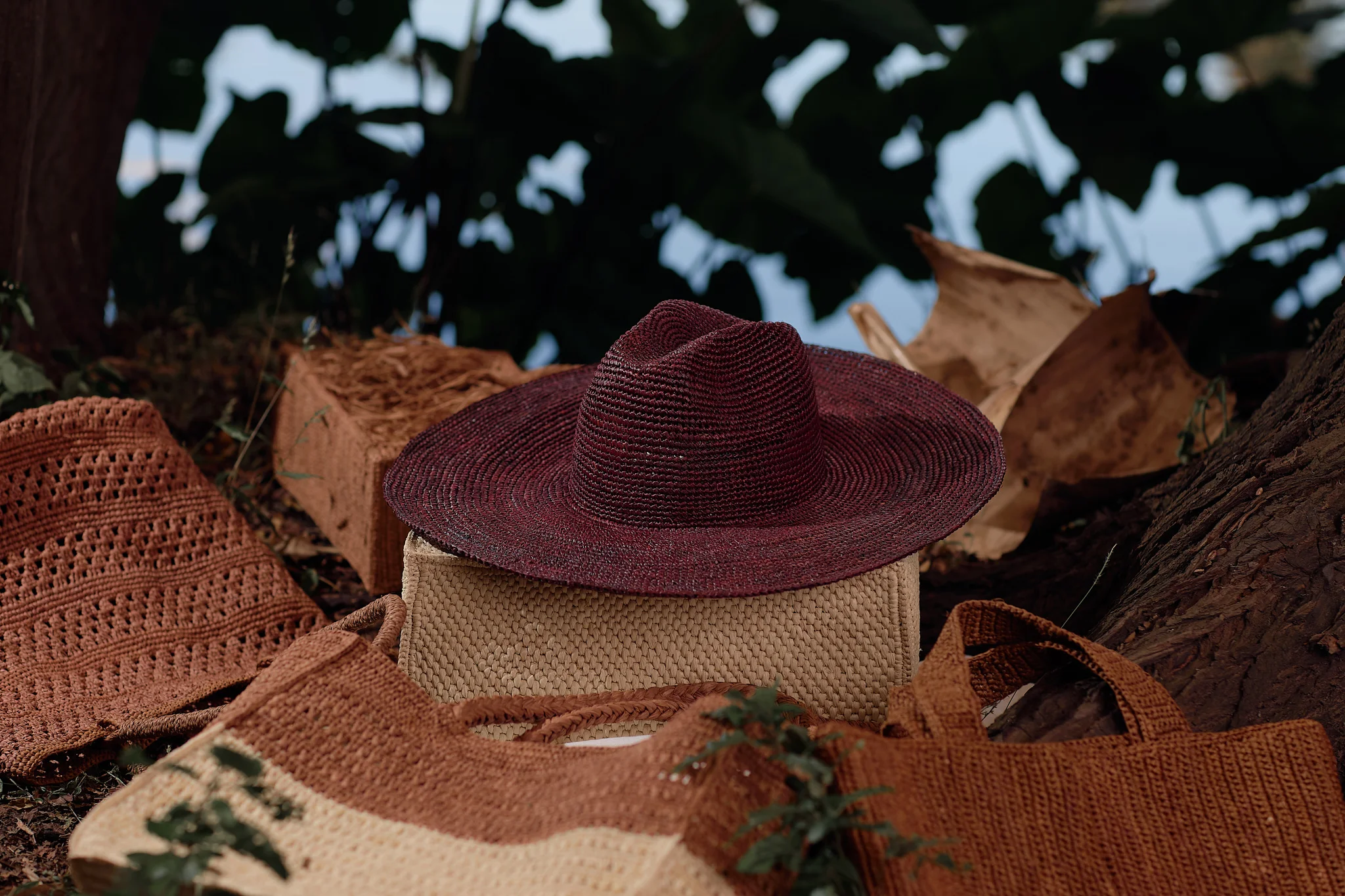
Colour in the world of raffia is far more than a mere aesthetic detail. It represents the perfect union of ancestral artisanal heritage and a contemporary vision of fashion.
Before being crafted, the fibre can be dyed according to the design to be realised. Here, two complementary techniques come together:
- Natural dyes, derived from Malagasy plants, barks, or roots, provide authentic and unique shades.
- Artisanal dyes, produced in small batches, allow precise colour control while minimising water consumption.
In both cases, the fibres are set and dried naturally, ready to be worked. This subtle blend of authenticity and modernity gives BLESSED raffia its unique and timeless character.
Let’s now turn to the making of the raffia bag, one of BLESSED’s fully compostable products.
5. Crafting a raffia bag: artisanal skill at the heart of every piece
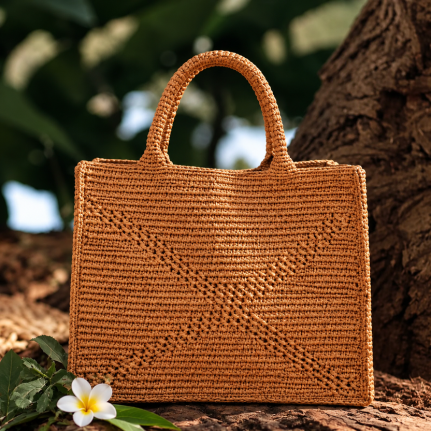
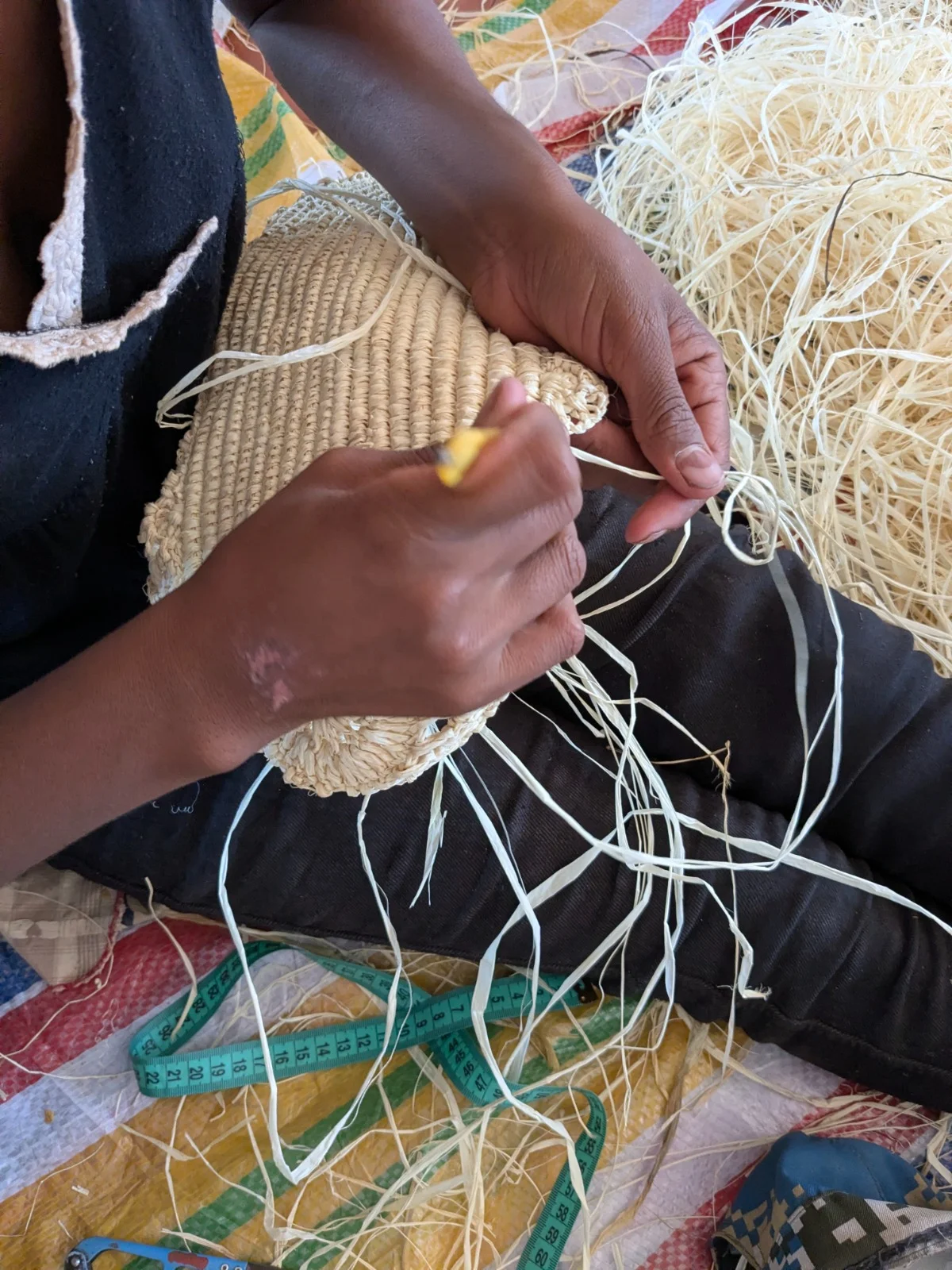
Once prepared and dyed, the raffia reaches the skilled hands of our artisans. It is they who shape it, using a variety of techniques: weaving, crocheting, fibre stitching, or manual assembly.
Nothing is mechanised. Each piece requires time, sometimes several days of careful work. This artisanal pace ensures unique creations, imbued with precision, patience, and authentic craftsmanship. In this way, the making of a raffia bag becomes a true artisanal gesture at the heart of every piece.
6. Using a raffia bag: a durable and versatile accessory
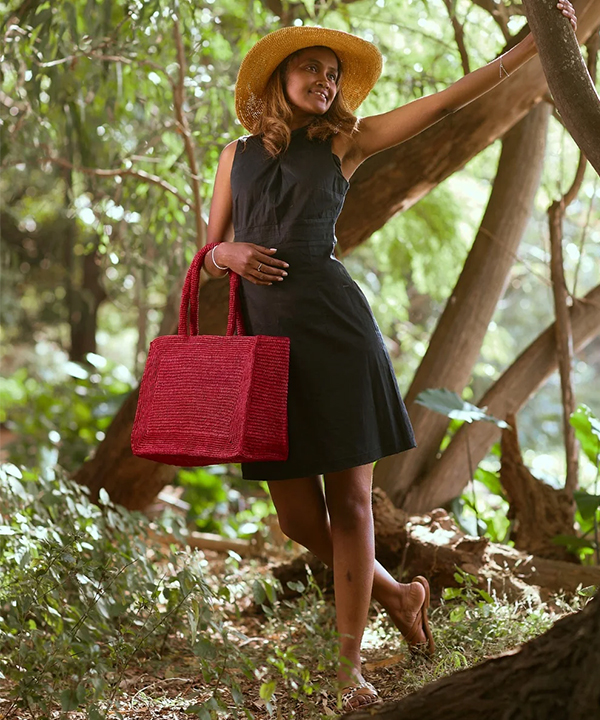
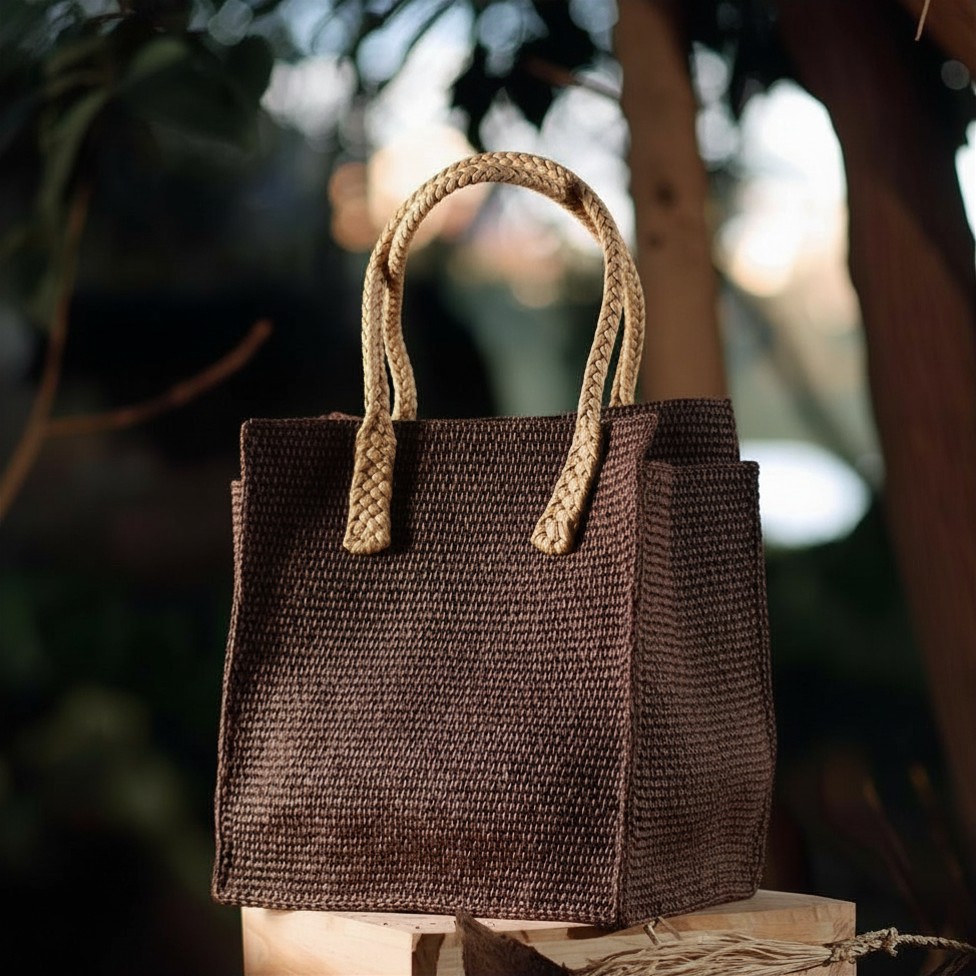
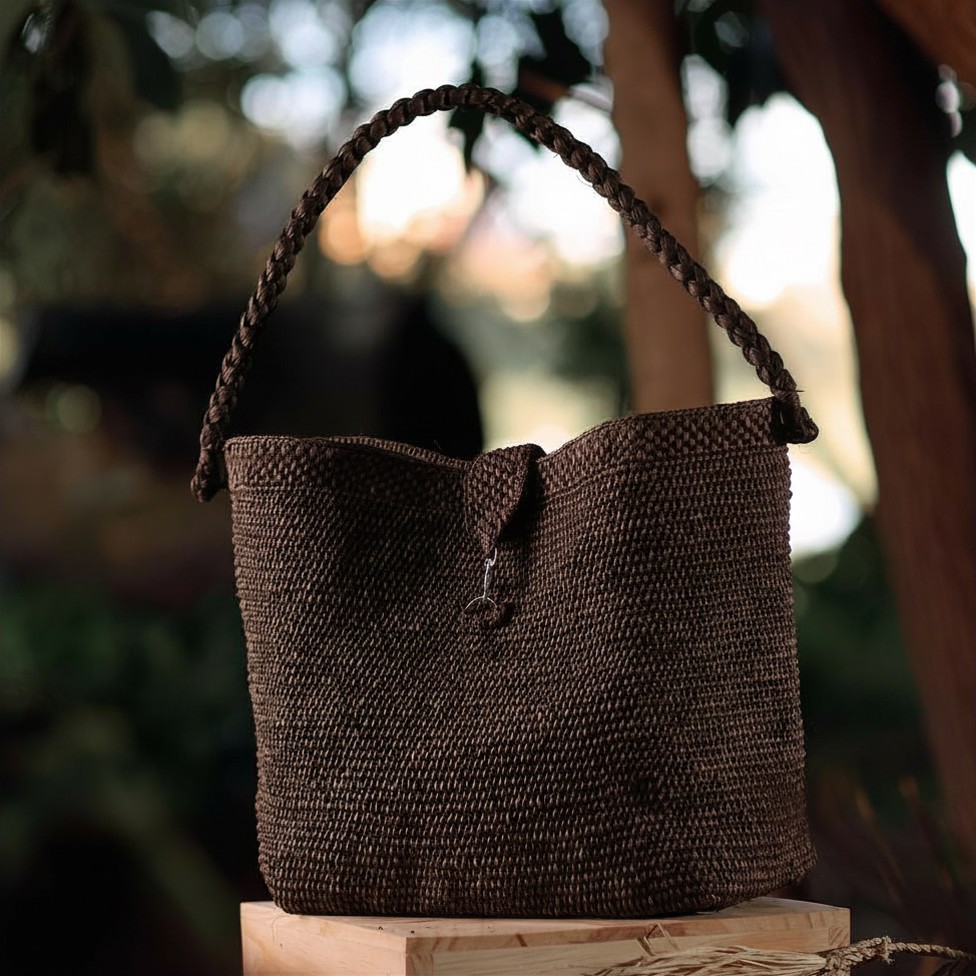
A raffia bag is a durable, versatile, and ethical accessory that complements every style and occasion. Once in use, the bag reveals its full strength. Lightweight, flexible, and robust, it accompanies daily life without losing shape.
With a few simple precautions avoiding prolonged moisture and excessive weight, it can last for many years. This longevity encourages more responsible, less disposable consumption.
Here are some articles to help you protect your accessories from moisture:
7. End of life: a natural return to the earth
When the accessory reaches the end of its use, its impact remains minimal. Made entirely from natural fibres, with no plastic or harmful additives, raffia decomposes within a few months
It can be composted or left to biodegrade naturally: a simple, clean return to the earth that completes a virtuous cycle. Thus, the raffia bag and other creations reach the end of their life cycle.
Conclusion
The lifecycle of a BLESSED raffia bag illustrates the harmony between nature, craftsmanship, and responsibility. From the plant to the compost, every stage reflects a clear commitment: preserving resources, valuing artisans, and offering durable, authentic accessories.
Choosing BLESSED means supporting more responsible fashion while enjoying pieces made with care, expertise, and respect for their environment.