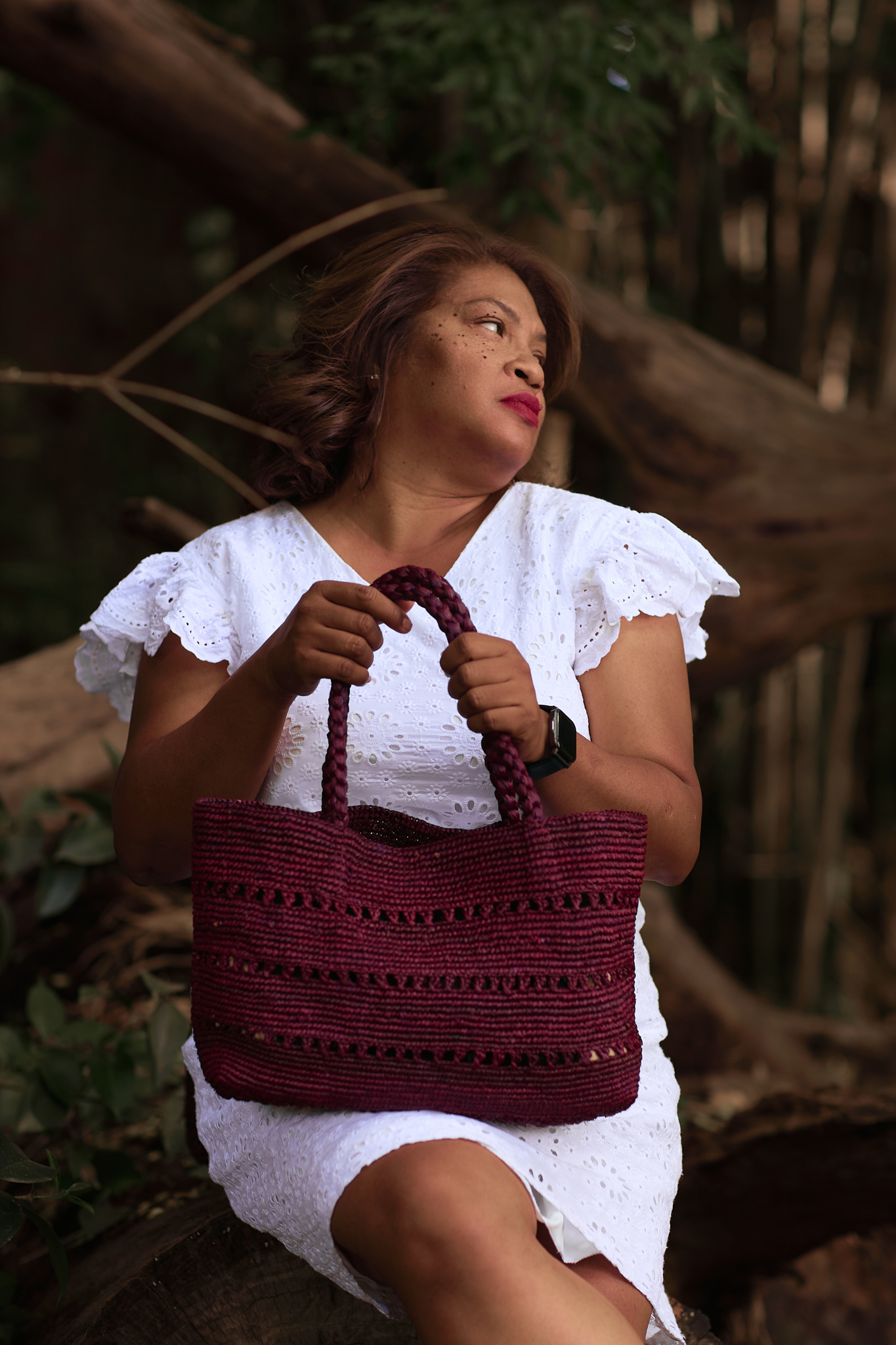
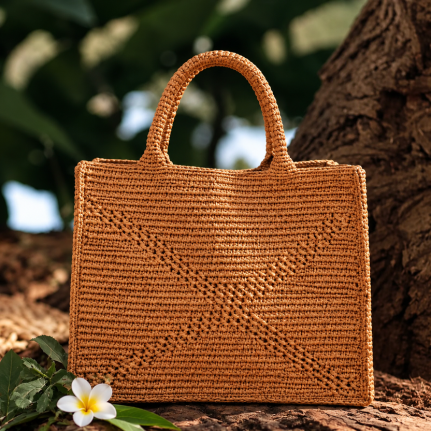
At markets, in boutiques or online, the observation is often the same: two raffia bags may look similar, yet display very different prices. This raises a legitimate question: why are some raffia bags more expensive than others?
Behind the price of an accessory lie realities far deeper than appearance alone. Material quality, production methods, social impact and durability all play a decisive role.
-> This leads to the following question: How do trade agreements influence the price of raffia?
Raffia: a material whose quality can vary
Natural raffia vs processed raffia
Not all raffia bags are made from the same fiber. Carefully harvested, dried and prepared natural raffia offers greater strength and long-lasting flexibility. By contrast, some bags are made using:
- lower-quality raffia,
- fibers blended with synthetic materials,
- chemical treatments to speed up production.
Raffia for women : how craftswomen transform fiber into freedom?
Raffia vs jute: which natural fiber should you choose for your project?
These differences in raw materials directly affect the final price.
fiber preparation: a crucial step
Preparing raffia — sorting, drying and softening — requires time and expertise. Careful preparation ensures a uniform, resilient fiber, which justifies a higher price.
Production time: an often invisible factor
Handmade work and human time
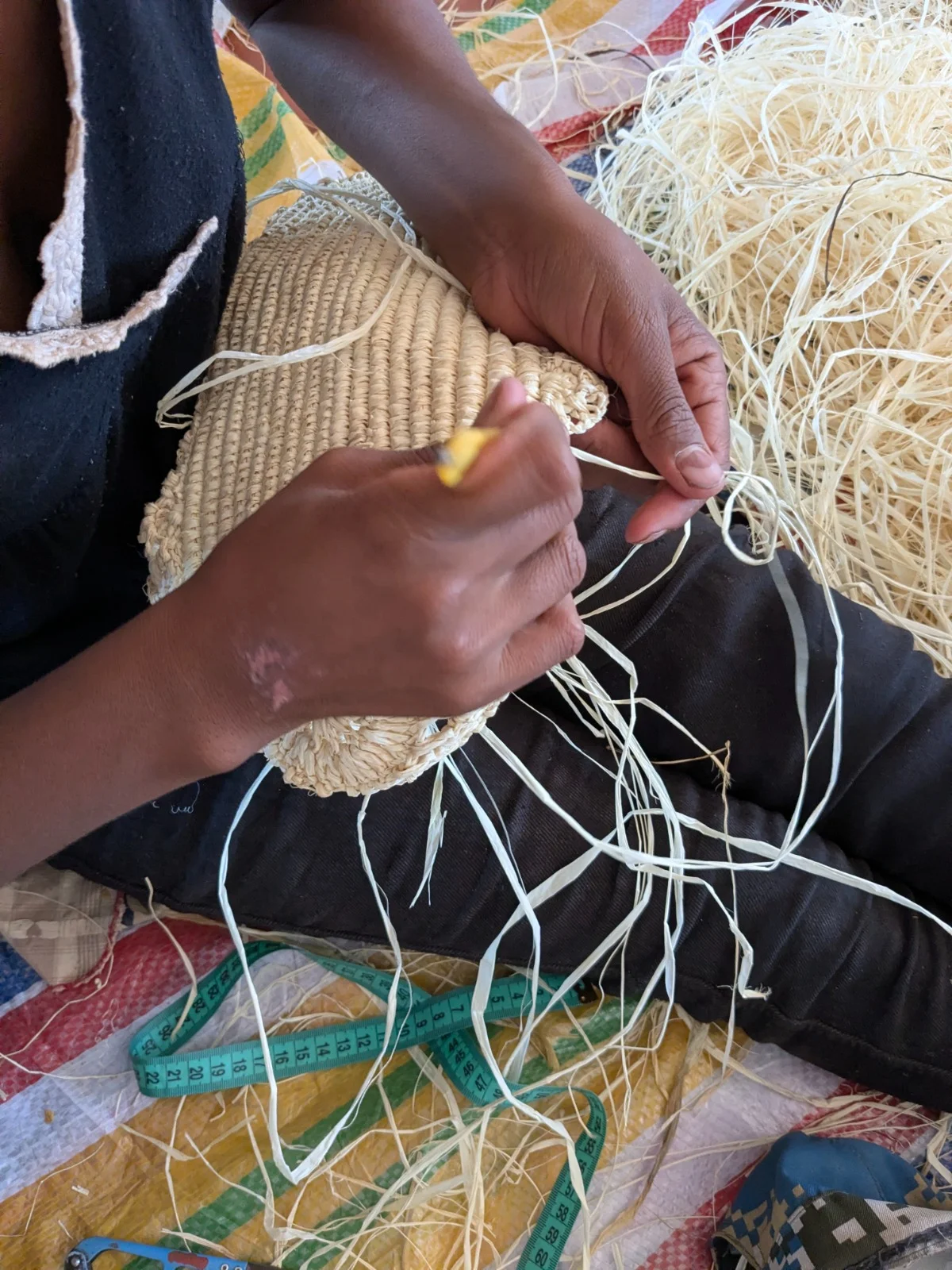
A handmade raffia bag can require several hours, or even several days, of manual work. Every stitch is crafted by hand, without automation, which involves:
- a slow production pace,
- great precision,
- constant attention to detail.
The price therefore reflects the human time invested in each creation.
Industrial production: speed with compromises
On the other hand, industrial raffia bags are produced quickly using machines. While this reduces costs, it often results in lower quality and reduced durability.
Weaving quality and finishing details
Tight, durable weaving
A higher-priced raffia bag often stands out thanks to:
- dense, even weaving,
- better long-term shape retention,
- increased resistance to weight and wear.
These technical details, sometimes barely noticeable at first glance, make all the difference over time.
Careful finishing
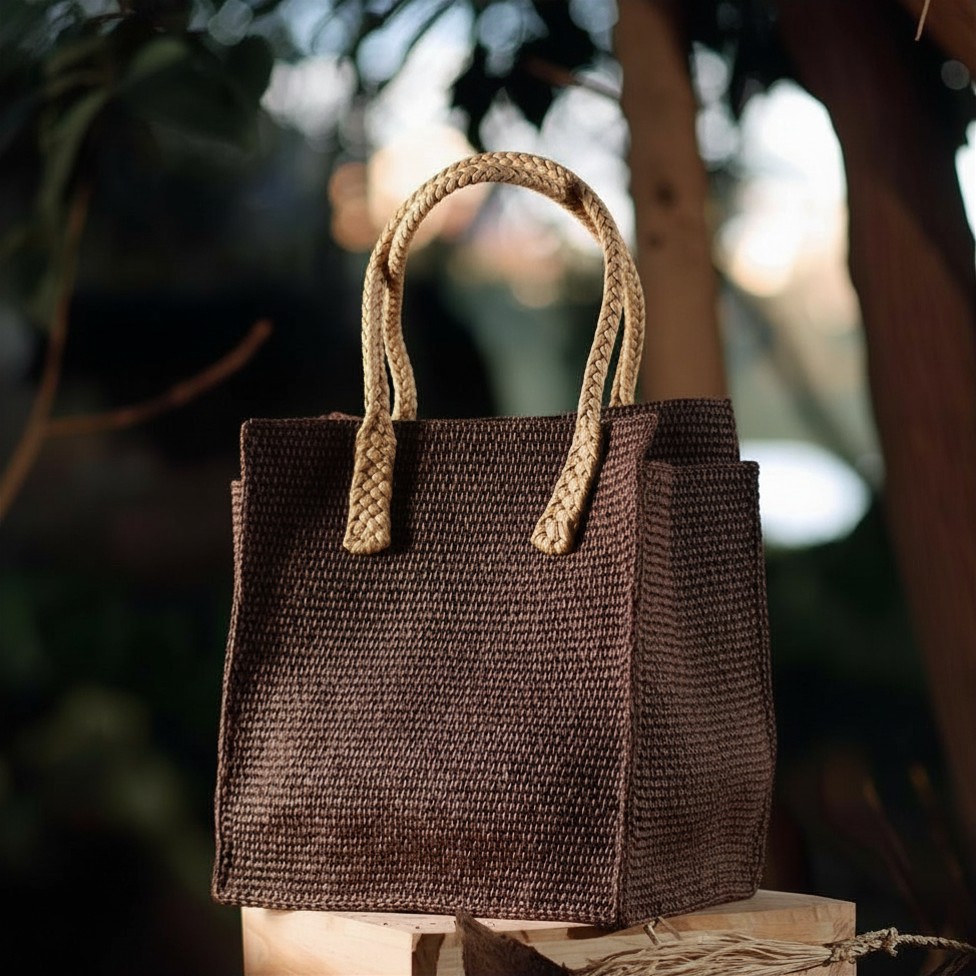
Reinforced handles, strong stitching, natural linings, clean edges… Finishing touches are a key indicator of quality. They require additional work, which is reflected in the price.
The future of raffia in fashion: challenges and opportunities for a clothing line
Fair pricing: remuneration and ethics
Fair pay for artisans
More expensive raffia bags are often the result of ethical production. This means:
- fair wages for artisans,
- respectful working conditions,
- recognition of traditional craftsmanship.
Paying a higher price can directly support artisan communities.
Transparency in the supply chain
Brands committed to sustainable fashion invest in traceability, quality and transparency. These commitments come at a cost, but they ensure a more responsible product.
Durability and long-term cost
A bag that lasts costs less over time
A high-quality raffia bag can last for many years without losing its appeal. By contrast, a cheaper but fragile bag will need to be replaced quickly. The higher initial price then becomes a long-term investment.
Buying less, but better
This approach aligns with responsible consumption: choosing one durable accessory rather than several lower-quality products.
How to recognise a raffia bag worth its price
What to look for before buying
To assess whether a raffia bag is fairly priced, consider checking:
- the origin of the raffia,
- the density of the weave,
- the strength of the handles,
- the brand’s reputation or ethical commitments.
Asking the right questions
A more expensive bag should be able to justify its price through a clear story, transparent sourcing and tangible quality. Transparency is often a strong indicator of real value.
–I’ve been the same crocheted raffia bag cheaper elsewhere: the scary objection… And how do you turn it into a sale?
–How to sheets: how to respond to the most common customer objections in an ethical boutique
–Launching an ethical boutique: why start BLESSED?
Conclusion: price as a reflection of value
If some raffia bags are more expensive than others, it is no coincidence. Price reflects material quality, production time, artisanal expertise, ethics and durability.
Choosing a higher-priced raffia bag often means choosing a responsible accessory — one with meaning, designed to last well beyond fleeting trends.